
Java算法练习day2
·
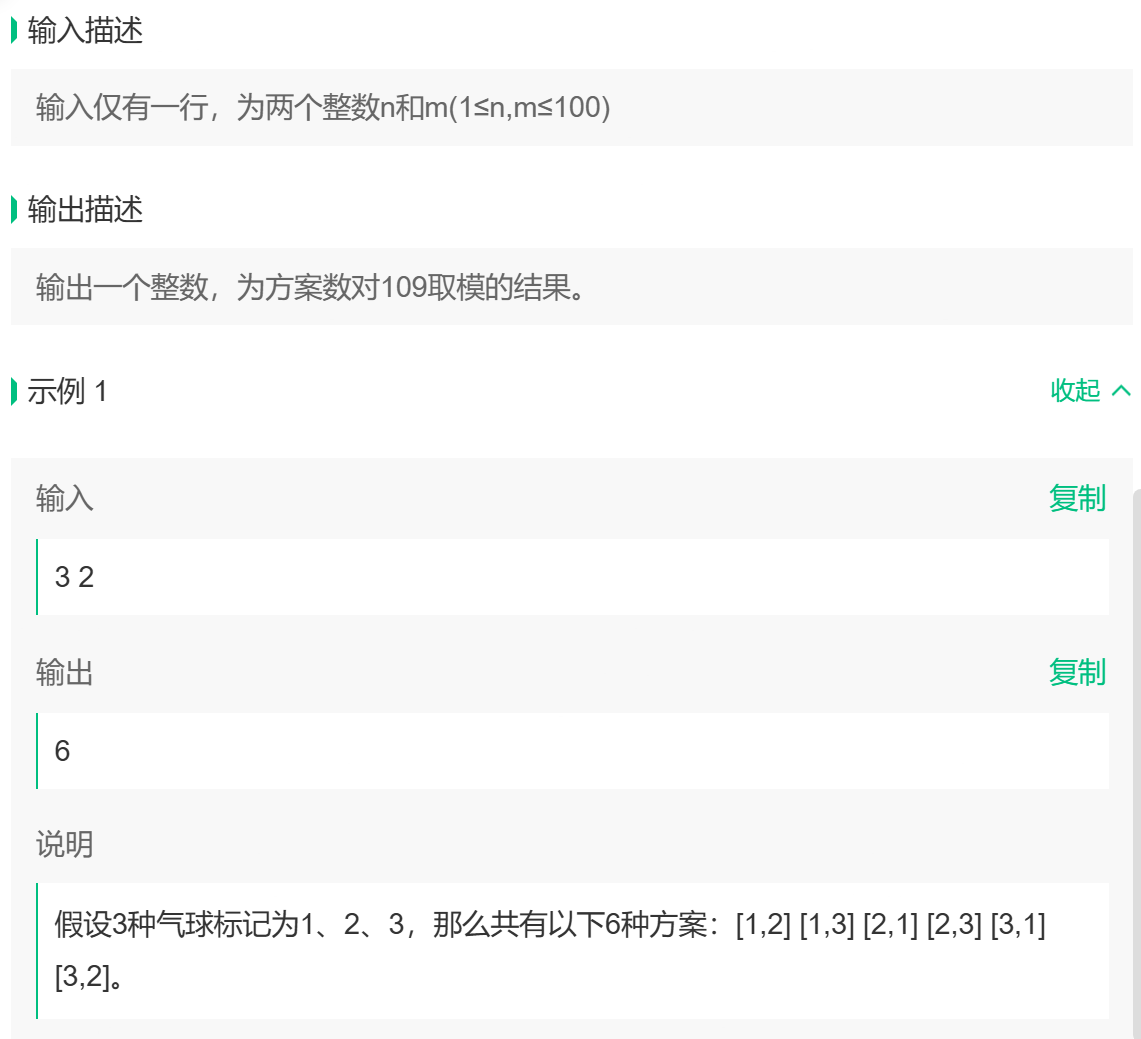
一、kotori和气球

import java.util.Scanner;

public class Main {
    public static void main(String[] args) {
        Scanner sc = new Scanner(System.in);
        int n = sc.nextInt();
        int m = sc.nextInt();
        long ans = n;
        for(int i = 1;i<m;i++){
            ans=(ans*(n-1))%109;
        }
        if(n==1&&m!=1) System.out.println(0);
        else System.out.println(ans);
    }
}
分析:
- 本题的推导过程:
- 第 1 个位置:
n种选择- 第 2~m 个位置:每个位置都不能和前一个相同,所以有
n-1种选择- 总方案数:
n × (n-1)^(m-1)- 这是排列组合里最基础的 “分步计数” 思想,也是这类 “相邻不同色 / 不同物” 问题的通用解法。
题目要求结果对
109取模,考察了模运算的基本性质:(a × b) % mod = [(a % mod) × (b % mod)] % mod
1.输入两个整数
int n = sc.nextInt();
int m = sc.nextInt();
2.排列组合运算,模运算
long ans = n;
for(int i = 1;i<m;i++){
    ans=(ans*(n-1))%109;
}
3.排除特殊情况
if(n==1&&m!=1) System.out.println(0);
else System.out.println(ans);
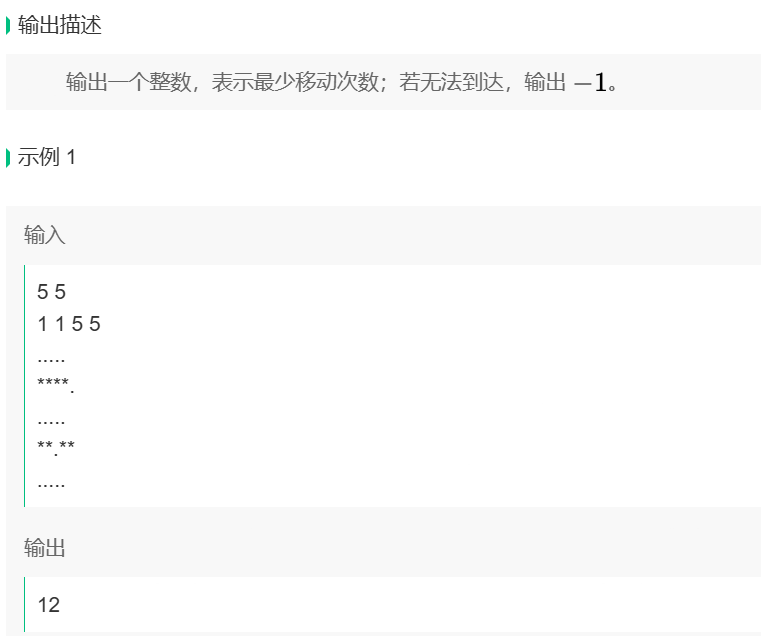
二、走迷宫
深度优先搜素

Scanner scan = new Scanner(System.in);
String[] nm = scan.nextLine().split(" ");
int n = Integer.valueOf(nm[0].trim());
int m = Integer.valueOf(nm[1].trim());
String[] se = scan.nextLine().split(" ");
// 注意:题目坐标是1-based,代码中转为0-based索引
int xs = Integer.valueOf(se[0].trim()) - 1;
int ys = Integer.valueOf(se[1].trim()) - 1;
int xe = Integer.valueOf(se[2].trim()) - 1;
int ye = Integer.valueOf(se[3].trim()) - 1;

// 读取网格地图
char[][] matrix = new char[n][m];
for (int i = 0; i < n; i++) {
    char[] chrs = scan.nextLine().toCharArray();
    for (int j = 0; j < chrs.length; j++) {
        matrix[i][j] = chrs[j];
    }
}


//BFS 初始化
// 特殊情况:起点就是终点,直接返回0
if (xs == xe && ys == ye) {
    System.out.println(0);
    return;
}

// steps数组:记录每个格子到起点的最短步数,初始为0
int[][] steps = new int[n][m];
steps[xs][ys] = 0;

// 队列用于BFS,存储待遍历的坐标
Queue<int[]> queue = new LinkedList<>();
int[] tmp = new int[] {xs, ys};
queue.add(tmp);


//BFS 核心循环
while (!queue.isEmpty()) {
    tmp = queue.poll(); // 取出队首坐标
    if (tmp[0] == xe && tmp[1] == ye) {
        break; // 到达终点,直接跳出循环
    }

    // 四个方向的移动判断(上、下、左、右)
    // 向上移动(行号减1)
    if (tmp[0] - 1 >= 0 && tmp[0] - 1 < n && tmp[1] >= 0 && tmp[1] < m && matrix[tmp[0] - 1][tmp[1]] == '.') {
        int[] location = new int[] {tmp[0] - 1, tmp[1]};
        queue.add(location);
        steps[location[0]][location[1]] = steps[tmp[0]][tmp[1]] + 1;
        matrix[tmp[0] - 1][tmp[1]] = '*'; // 标记为已访问,避免重复入队
    }
    // 向下移动(行号加1)
    if (tmp[0] + 1 >= 0 && tmp[0] + 1 < n && tmp[1] >= 0 && tmp[1] < m && matrix[tmp[0] + 1][tmp[1]] == '.') {
        int[] location = new int[] {tmp[0] + 1, tmp[1]};
        queue.add(location);
        steps[location[0]][location[1]] = steps[tmp[0]][tmp[1]] + 1;
        matrix[tmp[0] + 1][tmp[1]] = '*';
    }
    // 向左移动(列号减1)
    if (tmp[0] >= 0 && tmp[0] < n && tmp[1] - 1 >= 0 && tmp[1] - 1  < m && matrix[tmp[0]][tmp[1] - 1] == '.') {
        int[] location = new int[] {tmp[0], tmp[1] - 1};
        queue.add(location);
        steps[location[0]][location[1]] = steps[tmp[0]][tmp[1]] + 1;
        matrix[tmp[0]][tmp[1] - 1] = '*';
    }
    // 向右移动(列号加1)
    if (tmp[0] >= 0 && tmp[0] < n && tmp[1] + 1 >= 0 && tmp[1] + 1 < m && matrix[tmp[0]][tmp[1] + 1] == '.') {
        int[] location = new int[] {tmp[0], tmp[1] + 1};
        queue.add(location);
        steps[location[0]][location[1]] = steps[tmp[0]][tmp[1]] + 1;
        matrix[tmp[0]][tmp[1] + 1] = '*';
    }
}
分析:
这是一道经典的无权网格最短路径问题,核心要求:
- 在
n×m网格中,从起点(xs, ys)到终点(xt, yt)- 每次只能上下左右移动 1 步,不能走障碍物
*- 求最少移动次数,无法到达输出
-1这类题的最优解法是广度优先搜索(BFS),因为 BFS 天然适合求无权图的最短路径。
分析1:为什么不用nextInt() 直接读取m,n?
用
int a = sc.nextInt();
int b = sc.nextInt();
也行,但这道题后面要读一整行地图,混用 nextInt() 和 nextLine() 会吞回车、读空行报错!
Scanner scan = new Scanner(System.in);
String[] nm = scan.nextLine().split(" ");
int n = Integer.valueOf(nm[0].trim());
int m = Integer.valueOf(nm[1].trim());
String[] se = scan.nextLine().split(" ");
// 注意:题目坐标是1-based,代码中转为0-based索引
int xs = Integer.valueOf(se[0].trim()) - 1;
int ys = Integer.valueOf(se[1].trim()) - 1;
int xe = Integer.valueOf(se[2].trim()) - 1;
int ye = Integer.valueOf(se[3].trim()) - 1;

// 读取网格地图
char[][] matrix = new char[n][m];
for (int i = 0; i < n; i++) {
    char[] chrs = scan.nextLine().toCharArray();
    for (int j = 0; j < chrs.length; j++) {
        matrix[i][j] = chrs[j];
    }
}
.split(" ")是按空格切开,变成一堆小字符串,放进字符串数组
.trim()是去掉字符串前后多余空格,防止输入多空格报错。
--创建字符串数组,split()转化为变量的方式读取单个数据
--读取每行数据,循环储存在数组里的方式读取二维数组
分析2:
// 特殊情况:起点就是终点,直接返回0
if (xs == xe && ys == ye) {
    System.out.println(0);
    return;
}

// steps数组:记录每个格子到起点的最短步数,初始为0
int[][] steps = new int[n][m];
steps[xs][ys] = 0;

// 队列用于BFS,存储待遍历的坐标
Queue<int[]> queue = new LinkedList<>();
int[] tmp = new int[] {xs, ys};
queue.add(tmp);
更多推荐
 9
9 0
0- 0


 已为社区贡献4条内容

所有评论(0)