
【c++】string的底层实现
前言
C++ 中的 std::string 是日常开发最常用的字符串容器,相比 C 语言裸 char* 字符串,封装了内存管理、扩容、拷贝、拼接、查找等能力,自动处理内存分配释放,规避野指针、越界、内存泄漏问题。
很多人只会调用 +=、size()、substr(),却不清楚底层内存怎么存、扩容规则、深浅拷贝、短字符串优化,本文结合标准库原理 + 手写简易 string,彻底吃透底层。
在这里的底层实现仅仅是简单实现。
为了更方便观察与测试,和之前一样建立三个文件分别是声明、定义、测试。
声明与定义
先将整体架构给写出来
#pragma once
#include<iostream>
#include<string>
#include<assert.h>
using namespace std;

namespace XU
{
	class string
	{
        public:


        private:
                char* _str;
                size_t _size;
                size_t _capacity;
                static const szie_t npos;
    }
}
string就是针对字符串的顺序表因此private很显然,与顺序表中的变量是一样的。这里在这用一个域进行封装是为了后续进行操作时方便。这里的npos是为了代表失败或不存在,值为-1。
接着就是对功能的声明与定义。有一些常用的就直接在声明直接就进行定义了(内联函数),一些不常用的进行声明与定义分离。
内联函数
构造函数(给变量进行初始化)
string(const char* str = " ")
{
	_size = strlen(str);
	_capacity = _size;
	_str = new char[_capacity + 1];
	strcpy(_str, str);
}
new的时候加的1是给\0的空间。成员列表进行初始化需要按照private中变量的定义顺序进行由于_strz在最前面无法进行列表初始化。
静态变量不能再类中初始化需要在类外单独初始化。
const size_t string::npos=-1;拷贝构造(深拷贝)
string(const string& s)
{
	_str = new char[s._capacity + 1];
	strcpy(_str, s._str);
	_size = s._size;
	_capacity = s._capacity;
}
这是传统的一种方式。接下来写一个现代的方式
string(const String& s)
	: _str(nullptr)
{
	string strTmp(s._str);
	swap(_str, strTmp._str);
    //swap(strTmp)
}
意思就是将创建一个新的串对象strtmp并将其初始化为s._str,然后再将_str的值与strtmp值进行交换。注销掉的代码也可以执行是因为在这里面有隐含的this指针。
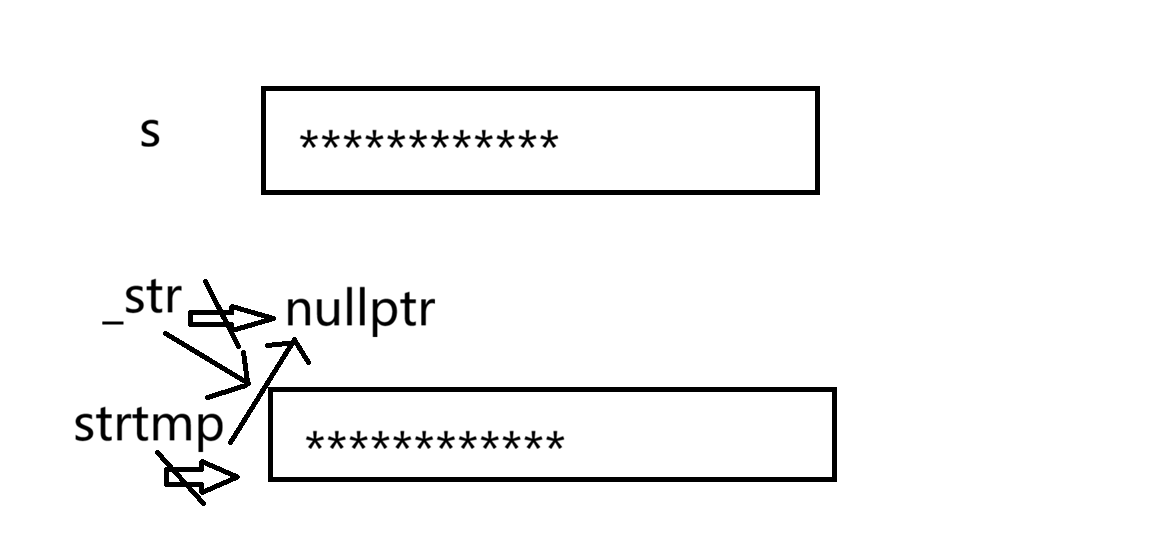
因为串中的赋值底层与拷贝很像因此接下来实现重载赋值
重载赋值(s1=s2)
string& operator=(const string& s)
{
	if (this != &s)
	{
		delete[]_str;
		_str = new char[s._capacity + 1];
		strcpy(_str, s._str);
		_size = s._size;
		_capacity = s._capacity;
	}
	return *this;
}
因为与拷贝相似依次这也是传统的方法。接下来是现代方法
	string& operator=(const String& s)
	{
		if (this != &s)
		{
			string strTmp(s);
			swap(_str, strTmp._str);
		}
		return *this;
	}
这里的逻辑与上面拷贝的一样
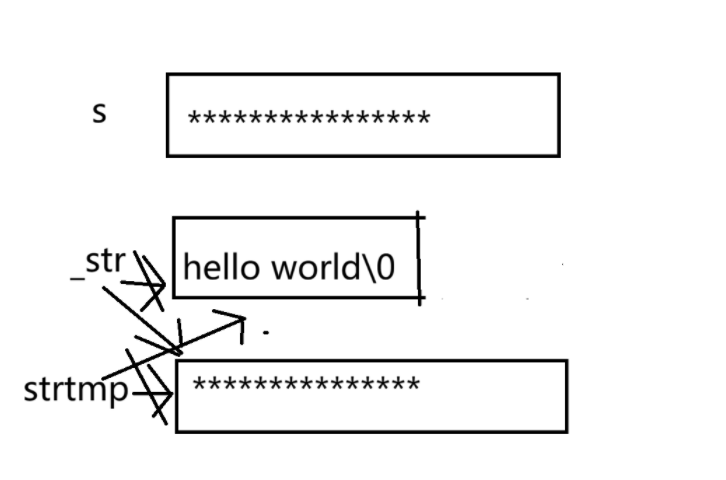
然后就是析构函数
析构函数
~string()
{
    delete[]_str;
    _str=nillptr;
    _size=_capacity=0;
}
然后是对迭代器的实现
迭代器
当然这里的逻辑很简单
typedef char* iterator;
typedef const char* const_iterator;

//正常的迭代器
iterator begin()
{
	return _str;
}
iterator end()
{
	return _str + _size;
}

//const迭代器
const_iterator begin()const
{
	return _str;
}
const_iterator end()const
{
	return _str + _size;
}
接下来还比较重要的就是重载[ ]其可以是strig像数组一样是使用。
重载[ ]
//重载[]
char& operator[](size_t pos)
{
	assert(pos < _size);
	return _str[pos];
}

//带const[]
const char& operator[](size_t pos)const
{
	assert(pos < _size);
	return _str[pos];
}
然后就是对一些私有的变量进行声明,使得这些变量在类外面也可以使用
对private成员变量的使用
/使用私有的_str
		const char* c_str()const
		{
			return _str;
		}


		//使用私有的_size
		size_t size()const
		{
			return _size;
		}


		//使用私有的_capacity
		size_t capacity()const
		{
			return _capacity;
		}
非内联函数
首先是reserve这个还是比较重要的插入时必须的判断空间是否足够
reserve
void string::reserve(size_t n)
{
	if (n > _capacity)
	{
		char* tmp = new char[n + 1];
		strcpy(tmp, _str);
		delete[]_str;
		_str = tmp;
		_capacity = n;
	}
}
push_back
这里是尾插一个字符
void string::push_back(char ch)
{
	if (_size >= _capacity)
	{
		reserve(_capacity == 0 ? 4 : 2 * _capacity);
	}
	_str[_size++] = ch;
	_str[_size + 1] = '\0';
}
append
这里就相当与尾插了一个字符串(多个字符)
void string::append(const char* str)
{
	int len=strlen(str);
	if (_size + len >= _capacity)
	{
		reserve(_size + len > 2 * _capacity ? _size + len : 2 * _capacity);
	}
	strcpy(_str + _size, str);
	_size += len;
}
重载+=
重载了上面的两种情况
string& string:: operator+=(char ch)
{
	push_back(ch);
	return *this;

}

string& string::operator+=(const char* str)
{
	append(str);
	return *this;
}
insert
这里的插入也分为两种插入一个字符与插入多个字符
	//这里的插入逻辑都与顺序表一样
	void string::insert(size_t pos, char ch)
	{
		if (_size >= _capacity)
		{
			reserve(_capacity == 0 ? 4 : 2 * _capacity);
		}
		for (int i = _size + 1; i > pos; i--)
		{
			_str[i] = _str[i - 1];
		}
		_str[pos] = ch;
		_size++;
	}

	void string::insert(size_t pos, const char* str)
	{
		int len = strlen(str);
		if (_size + len >= _capacity)
		{
			reserve(_size + len > 2 * _capacity ? _size + len : 2 * _capacity);
		}
		for (int i = _size + len; i > pos; i--)
		{
			_str[i] = _str[i - len];
		}
		//将新的string片段插入原来的string中
		for (int i = 0; i < len; i++)
		{
			_str[pos + i] = str[i];
		}
		_size += len;
	}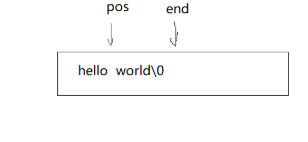
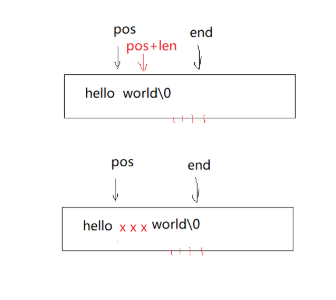
左边是插入一个字符,右边是插入多个字符
delete
删除又有两种情况一种是后面全部删除,另一种删除固定字符
void string::erase(size_t pos, size_t len )
{
	assert(pos < _size);
	if (pos + len > _size)
	{
		_str[pos] = '\0';
		_size = pos;
	}
	else
	{
		for (int i = pos + len; i < _size; i++)
		{
			_str[i - len] = _str[i];
		}
	}
	_size -= len;
}
这里是第一种逻辑图
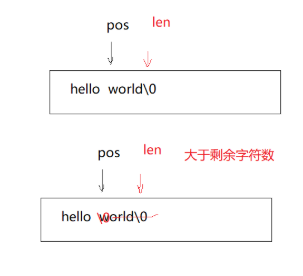
这里是第二种逻辑图

find
size_t string::find(char ch, size_t pos)
{
	assert(pos < _size);
	for (size_t i = pos; i < _size; i++)
	{
		if (_str[i] = ch)
		{
			return i;
		}
	}
	return npos;
}

size_t string::find(const char* str, size_t pos)
{
	assert(pos < _size);
	const char* ptr = strstr(_str + pos, str);
	if (ptr == NULL)
	{
		return npos;
	}
	else
	{
		return ptr - _str;
	}
}
substr
string string::substr(size_t pos , size_t len)
{
	assert(pos < _size);
	if (len > _size - pos)
	{
		len = _size - pos;
	}

	string sub;
	sub.reserve(len);
	for (size_t i = 0; i < len; i++)
	{
		sub += _str[pos + i];

	}
	return sub;

}
重载比大小的符号
记住重载类似的符号时先自己实现两个,其余的直接重载定义过的。
bool operator <(const string& s1, const string& s2)
{
	return strcmp(s1.c_str(), s2.c_str()) < 0;
}


bool operator <=(const string& s1, const string& s2)
{
	return s1 < s2 || s1 == s2;
}


bool operator >=(const string& s1, const string& s2)
{
	return !(s1 < s2);
}
bool operator >(const string& s1, const string& s2)
{
	return !(s1 <= s2);
}

bool operator ==(const string& s1, const string& s2)
{
	return strcmp(s1.c_str(), s2.c_str()) == 0;


}
bool operator !=(const string& s1, const string& s2)
{
	return !(s1 == s2);
}
重载流插入和流提取
这一部分写在了类的外面,是因为这两个用不到成员函数和园,因此也没有声明成友元函数。
ostream& operator <<(ostream& out, const string& s)
{
	for (auto ch : s)
	{
		out << ch;
	}
	return out;
}
istream& operator >>(istream& in, string& s)
{
	s.clear();
	const int N = 256;
	char buff[N];
	int i = 0;
	char ch;
	ch = in.get();
	while (ch != ' ' && ch != '\n')
	{
		buff[i++] = ch;
		if (i == N - 1)
		{
			buff[i] = '\0';
			s += buff;
			i = 0;
		}
		ch = in.get();
	}
	if (i > 0)
	{
		buff[i] = '\0';
		s += buff;
	}
	return in;
}
在这里我所介绍的功能就结束了。
上面我将声明与定义本该分开写的我放在了一起,方便介绍。也就是前两个部分已经介绍完成接下来是测试环节。
测试
namespace bit
{
	void test_string1()
	{
		string s1;
		string s2("hello world");
		cout << s1.c_str() << endl;
		cout << s2.c_str() << endl;

		for (size_t i = 0; i < s2.size(); i++)
		{
			s2[i] += 2;
		}

		cout << s2.c_str() << endl;

		for (auto e : s2)
		{
			cout << e << " ";
		}
		cout << endl;

		string::iterator it = s2.begin();
		while (it != s2.end())
		{
			//*it += 2;
			cout << *it << " ";
			++it;
		}
		cout << endl;
	}

	void test_string2()
	{
		string s1("hello world");
		s1 += 'x';
		s1 += '#';
		cout << s1.c_str() << endl;

		s1 += "hello bit";
		cout << s1.c_str() << endl;

		s1.insert(5, '$');
		cout << s1.c_str() << endl;

		s1.insert(0, '$');
		cout << s1.c_str() << endl;

		string s2("hello world");
		cout << s2.c_str() << endl;

		s2.insert(5, "$$$");
		cout << s2.c_str() << endl;

		s2.insert(0, "$$$&&&&&&&&&&&&&&&&&&&&&&&&&&&&&");
		cout << s2.c_str() << endl;
	}

	void test_string3()
	{
		string s1("hello world");
		s1.erase(6, 100);
		cout << s1.c_str() << endl;

		string s2("hello world");
		s2.erase(6);
		cout << s2.c_str() << endl;

		string s3("hello world");
		s3.erase(6, 3);
		cout << s3.c_str() << endl;
	}

	void test_string4()
	{
		string s("test.cpp.zip");
		size_t pos = s.find('.');
		string suffix = s.substr(pos);
		cout << suffix.c_str() << endl;

		string copy(s);
		cout << copy.c_str() << endl;

		s = suffix;
		cout << suffix.c_str() << endl;
		cout << s.c_str() << endl;

		s = s;
		cout << s.c_str() << endl;
	}

	void test_string5()
	{
		string s1("hello world");
		string s2("hello world");

		cout << (s1 < s2) << endl;
		cout << (s1 == s2) << endl;
		cout << ("hello world" < s2) << endl;
		cout << (s1 == "hello world") << endl;
		//cout << ("hello world" == "hello world") << endl;

		cout << s1 << s2 << endl;

		string s0;
		cin >> s0;
		cout << s0 << endl;
	}
}

int main()
{
	//bit::test_string5();

	// 编码 值和符号映射编码关系
	// 文字 -- 符号
	// 内存和磁盘只有0101

	//char buff[] = "apple sort";
	char buff[4];
	buff[0] = 97;
	buff[1] = 98;
	buff[2] = 99;
	buff[3] = 0;

	cout << buff << endl;

	char str[] = "牛马";
	cout << strlen(str) << endl;
	str[1]++;
	cout << str << endl;

	str[3]--;
	cout << str << endl;

	str[1]++;
	cout << str << endl;

	str[3]--;
	cout << str << endl;

	return 0;
}
到这里介绍完毕感谢支持!!!
更多推荐
 4
4 0
0- 0


 已为社区贡献2条内容

所有评论(0)