
C++工程实战入门笔记11-三种初始化成员变量的方式
·
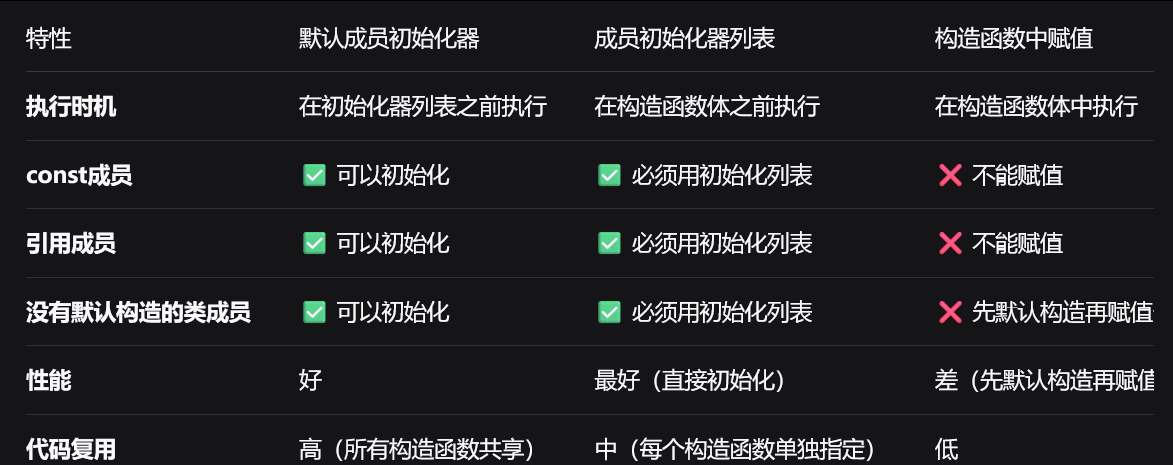
1. 默认成员初始化器 (C++11)
在类声明中直接给成员变量赋初值。
class MyClass {
public:
    MyClass() {} // 构造函数可以使用这些默认值

private:
    int x = 0;           // 默认成员初始化
    string name = "default";
    vector<int> data{1, 2, 3}; // 使用大括号初始化
};
2. 构造函数的成员初始化器列表
在构造函数参数列表后使用冒号初始化成员。
class MyClass {
public:
    // 成员初始化器列表
    MyClass(int value, const string& n) : x(value), name(n), data{1, 2, 3} {
        // 构造函数体
    }

private:
    int x;
    string name;
    vector<int> data;
};
3. 构造函数中赋值
在构造函数体内使用赋值语句。
class MyClass {
public:
    MyClass(int value, const string& n) {
        // 构造函数体内赋值
        x = value;
        name = n;
        data = {1, 2, 3}; // 需要先默认构造,再赋值
    }

private:
    int x;
    string name;
    vector<int> data;
};
 # 例子
# 例子
class Student {
public:
    // 推荐:使用成员初始化器列表 + 默认成员初始化器
    Student(int id, const string& n)
        : studentId(id), name(n) // 必须用初始化列表的
    {
        // 构造函数体
    }

    // 重载构造函数
    Student() : studentId(0) {
        // 使用默认成员初始化器的值
    }

private:
    const int studentId;       // const成员必须用初始化列表
    string name = "Unknown";   // 默认值
    vector<string> courses{};  // 空列表初始化
    int score = 60;            // 基本类型默认值
};

// 使用
Student s1(123, "Alice"); // studentId=123, name="Alice", score=60
Student s2;               // studentId=0, name="Unknown", score=60
更多推荐



 3
3 0
0- 0


 已为社区贡献6条内容

所有评论(0)