
C++ STL常用容器1——string容器
写在前面:⭐如果本篇博文对你有帮助,那就关注 + 点赞 + 收藏一下吧!
目录
1.string基本概念
本质:
●string是C++风格的字符串,而string本质上是一个类
string和char *区别:
●char*是一个指针
●string是一个类,类内部封装了char*,管理这个字符串,是一个char*型的容器。
特点:
string类内部封装了很多成员方法
例如:查找find,拷贝copy,制除delete替换replace,插入insert
string管理char*所分配的内存,不用担心复制越界和取值越界等,由类内部进行负责
2.string构造函数
构造函数原型:
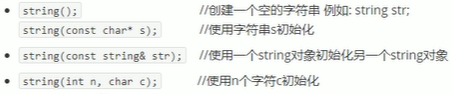
示例:
#include <iostream>
using namespace std;
//string构造函数

void test01()
{
    string s1;  //默认构造
    const char *str = "hello world";
    string s2(str);  //把c_string转换成了string
    cout << "s2 = " << s2 << endl;  //s2 = hello world

    string s3(s2);
    cout << "s3 = " << s3 << endl;  //s3 = hello world

    string s4(10,'a');  //使用拷贝构造函数
    cout << "s4 = " << s4 << endl;  //s4 = aaaaaaaaaa
}
int main()
{
    test01();
    return 0;
}
总结:string的多种构造方式没有可比性,灵活使用即可
3.string容器
功能描述:给string字符串进行赋值
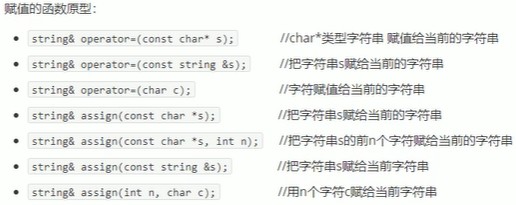
示例:
#include <iostream>
using namespace std;
//string赋值操作
void test01()
{
    string str1;
    str1 = "hello world";
    cout << "str1 = " << str1 << endl;

    string str2;
    str2 = str1;
    cout << "str2 = " << str2 << endl;

    string str3;
    str3 = 'a';
    cout << "str3 = " << str3 << endl;

    string str4;
    str4.assign("hello C++");
    cout << "str4 = " << str4 << endl;

    string str5;
    str5.assign("hello C++",5);
    cout << "str5 = " << str5 << endl;

    string str6;
    str6.assign(str5);
    cout << "str6 = " << str6 << endl;

    string str7;
    str7.assign(10,'w');
    cout << "str7 = " << str7 << endl;
}
int main()
{
    test01();

    return 0;
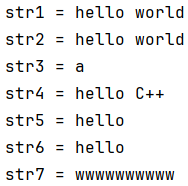
}
总结:string的赋值方式很多,operator=这种方式是比较实用的
4.string字符串拼接
功能描述:●实现在字符串末尾拼接字符串
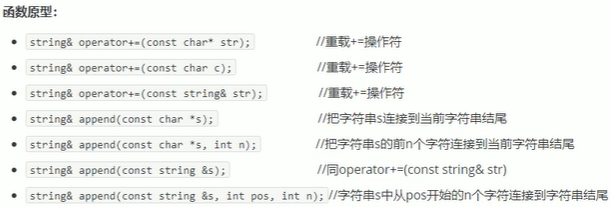
示例:
#include <iostream>
using namespace std;
//string字符串拼接
void test01()
{
    string str1 = "我";
    str1 += "爱玩游戏";
    cout << "str1 = " << str1 << endl;

    str1 += ":";
    cout << "str1 = " << str1 << endl;

    string str2 = "LOL DNF";
    str1 += str2;
    cout << "str1 = " << str1 << endl;

    string str3 = "I";
    str3.append(" Love");
    cout << "str3 = " << str3 << endl;

    str3.append(" Play Game",5);
    cout << "str3 = " << str3 << endl;
    //str3 = I Love Play

    // str3.append(str2);
    // cout << "str3 = " << str3 << endl;

    // str3.append(str2,0,3);  //只截取到LOL
    // cout << "str3 = " << str3 << endl;
    //str3 = I Love PlayLOL

    str3.append(str2,4,3);  //只截取了DNF
    cout << "str3 = " << str3 << endl;
    //str3 = I Love PlayDNF

}
int main()
{
    test01();
    return 0;
}
总结:字符串拼接的重载版本很多,初学阶段记住几种即可
5.string查找和替换
功能描述:
●查找:查找指定字符串是否存在
●替换:在指定的位置替换字符串
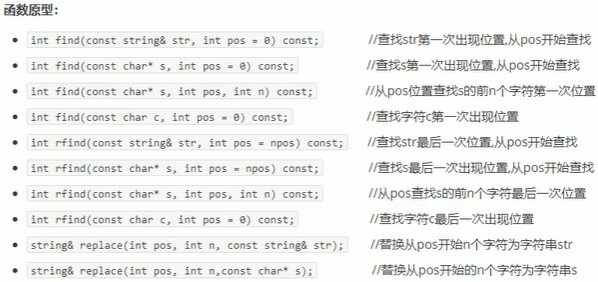
示例:
#include <iostream>
using namespace std;
//string查找和替换
//1.查找
void test01()
{
    // find 从左开始查找
    string str1 = "abcdefgde";
    int pos = str1.find("de");
    if(pos == -1)
    {
        cout << "未找到" << endl;
    }
    else
    {
        cout << "pos = " << pos << endl;  //pos = 3
    }

    //rfind 从右开始查找
    pos = str1.rfind("de");
    cout << "pos = " << pos << endl;  //pos = 7
}
//2.替换
void test02()
{
    string str1 = "abcdefgde";
    //从1号位置起3个字符替换为“1111”
    str1.replace(1,3,"1111");
    cout << "str1 = " << str1 << endl; //str1 = a1111efgde
}
int main()
{
    //test01();
    test02();
    return 0;
}
总结:
●find查找是从左往后,rfind从右往左
●find找到字符串后返回查找的第一个字符位置,找不到返回-1
●replace在替换时,要指定从哪个位置起,多少个字符,替换成什么样的字符串
6.string字符串比较
功能描述:
●字符串之间的比较
比较方式:
●字符串比较是按字符的ASCII码进行对比
=返回 0
>返回 1
<返回 -1
函数原型:
●int compare(const string &s) const; //与字符串s比较
●int compare(const char *s) const; //与字符串s比较
示例:
#include <iostream>
using namespace std;
//string字符串比较
void test01()
{
    string str1 = "xello";
    string str2 = "hello";
    if(str1.compare(str2) == 0)
    {
        cout << "str1 == str2" << endl;
    }else if(str1.compare(str2) > 0)
    {
        cout << "str1 > str2" << endl;
    }
    else
    {
        cout << "str1 < str2" << endl;
    }

    //str1 > str2
}
int main()
{
    test01();
    return 0;
}
总结:字符串对比主要是用于比较两个字符串是否相等,判断谁大谁小的意义并不是很大
7.string字符存取
string中单个字符存取方式有两种:
char& operator[](int n); //通过O方式取字符
char& at(int n); //通过at方法获取字符
示例:
#include <iostream>
using namespace std;
//string字符存取
void test01()
{
    string str1 = "hello";
    //1.通过[]访问单个字符
    for (int i = 0; i < str1.size(); i++)
    {
        cout << str1[i] << " ";
    }
    cout << endl;
    //2.通过at()访问单个字符
    for (int i = 0; i < str1.size(); i++)
    {
        cout << str1.at(i) << " " ;
    }
    cout << endl;

    //修改单个字符
    str1[0] = 'x';
    cout << "str1 = " << str1 << endl;  //str1 = xello
    str1.at(1) = 'y';
    cout << "str1 = " << str1 << endl;  //str1 = xyllo
}
int main()
{
    test01();
    return 0;
}
总结:string字符串中单个字符存取有两种方式,利用[ ]或at
8.string插入和删除
功能描述:
●对string字符串进行插入和删除字符操作
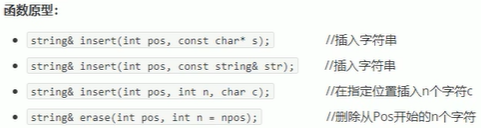
示例:
#include <iostream>
using namespace std;
//string插入和删除
void test01()
{
    string str1 = "hello";
    //插入
    str1.insert(1,"111");
    cout << "str1 = " << str1 << endl;  //str1 = h111ello
    //删除
    str1.erase(1,3);  //从1号位置开始3个字符
    cout << "str1 = " << str1 << endl;  //str1 = hello
}
int main()
{
    test01();
    return 0;
}
总结:插入和删除的起始下标都是从0开始
9.string子串
功能描述:从字符串中获取想要的子串
函数原型:
string substr (int pos = 0,int n = npos) const; //返回由pos开始的n个字符组成的字符串
示例:
#include <iostream>
using namespace std;
//string求子串
void test01()
{
    string str = "abcdefg";
    string subStr = str.substr(1,3);
    cout << "subStr = " << subStr << endl;  //subStr = bcd
}

//实用操作
void test02()
{
    string email = "hello@gmail.com";
    //从邮件地址中获取用户名信息
    string username = email.substr(0,email.find('@'));
    cout << "用户名:" << username << endl;  //用户名:hello
}
int main()
{
    test01();
    test02();
    return 0;
}
总结:灵活的运用求子串功能,可以在实际开发中获取有效的信息
写到后面:⭐如果本篇博文对你有帮助,那就关注 + 点赞 + 收藏一下吧!
更多推荐
 10
10 0
0- 0


 已为社区贡献6条内容

所有评论(0)