
C++STL容器——list和模拟实现
1 list的介绍和使用
1.1 list的介绍
1.2 list的使用
1.2.1 list的构造
| 构造函数(constructor) | 接口说明 |
|---|---|
| list (size_type n, const value_type& val = value_type()) | 构造的 list 中包含 n 个值为 val 的元素 |
| list() | 构造空的 list |
| list (const list& x) | 拷贝构造函数 |
| list (InputIterator first, InputIterator last) | 用 [first, last) 区间中的元素构造 list |
1.2.2 list iterator 的使用
我们可以将iterator理解为一个指针里面存着一个结点,但是他和普通指针不同之处在于,它除了存着结点还存着方法
| 函数声明 | 接口说明 |
|---|---|
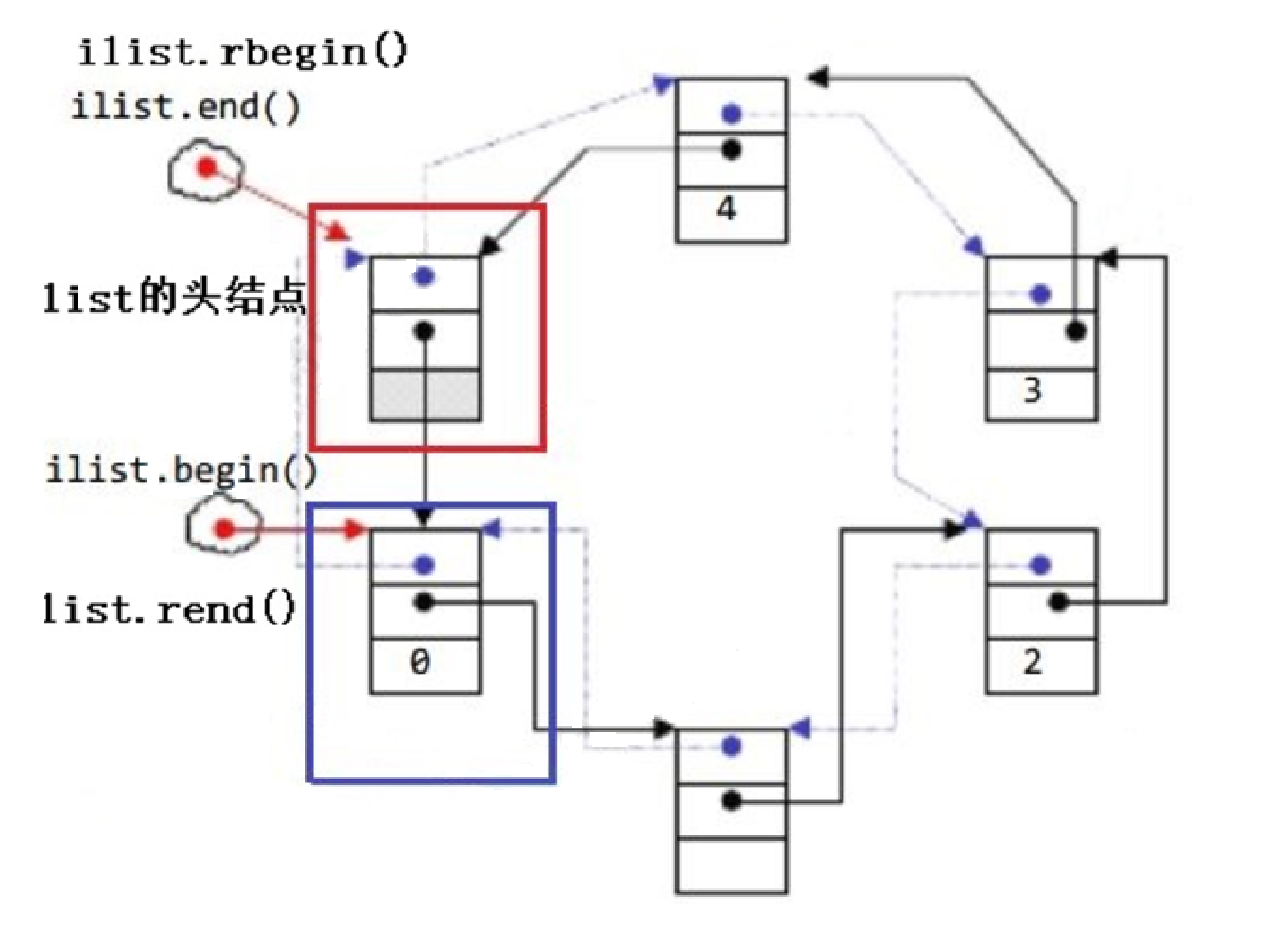
| begin+ end | 返回第一个元素的迭代器;返回最后一个元素下一个位置的迭代器 |
| rbegin + rend | 返回反向迭代器 rbegin(对应正向 end 位置);rend 反向迭代器(对应正向 begin 位置),用于逆序遍历容器 |
注意:
1 begin和end都是正向迭代器,对迭代器进行++操作,迭代器向后操作
2 rbegin和rend都是反向迭代器,对迭代器进行++操作,迭代器向后操作
1.2.3 list capacity
| 函数声明 | 接口说明 |
|---|---|
| empty | 检测 list 是否为空,是返回 true,否则返回 false |
| size | 返回 list 中有效节点的个数 |
1.2.4 list element access
| 函数声明 | 接口说明 |
|---|---|
| front | 返回 list 的第一个节点中值的引用 |
| back | 返回 list 的最后一个节点中值的引用 |
1.2.5 list modifiers
| 函数声明 | 接口说明 |
|---|---|
| push_front | 在 list 首元素前插入值为 val 的元素 |
| pop_front | 删除 list 中第一个元素 |
| push_back | 在 list 尾部插入值为 val 的元素 |
| pop_back | 删除 list 中最后一个元素 |
| insert | 在 list position 位置中插入值为 val 的元素 |
| erase | 删除 list position 位置的元素 |
| swap | 交换两个 list 中的元素 |
| clear | 清空 list 中的有效元素 |
list中还有一些操作,需要用到时大家可参阅list的文档说明,这里就不做过多的说明只挑重要的探讨。
2 再探iterator迭代器
2.1 迭代器分类
2.1.1 随机迭代器
iterator支持 ++/--/+/-
例如:vector/string/......
2.1.2 双向迭代器
iterator支持 ++/--
例如:list/map/set/......
2.1.3 单向迭代器
iterator支持 +/-
例如:forward_list/undordered_map/......
2.2 迭代器和指针的异同
2.2.1指针
- 直接存储内存地址,
*p就是解引用访问内存; - 只适用于连续内存:数组、堆上连续分配内存;
- 自增
p++等价于地址偏移+sizeof(T)。
2.2.2迭代器
不同容器迭代器实现完全不同:
vector/deque:本质就是封装后的指针(随机访问迭代器);list/map/set:完全不是指针,是指向链表节点、红黑树节点的对象,内部存节点指针;string:同样封装指针;- 甚至可以有无内存地址的迭代器(如
istream_iterator)。
迭代器有着指针没有的优势是,可以通过类的方法实现更多操作
2.3 list 迭代器失效
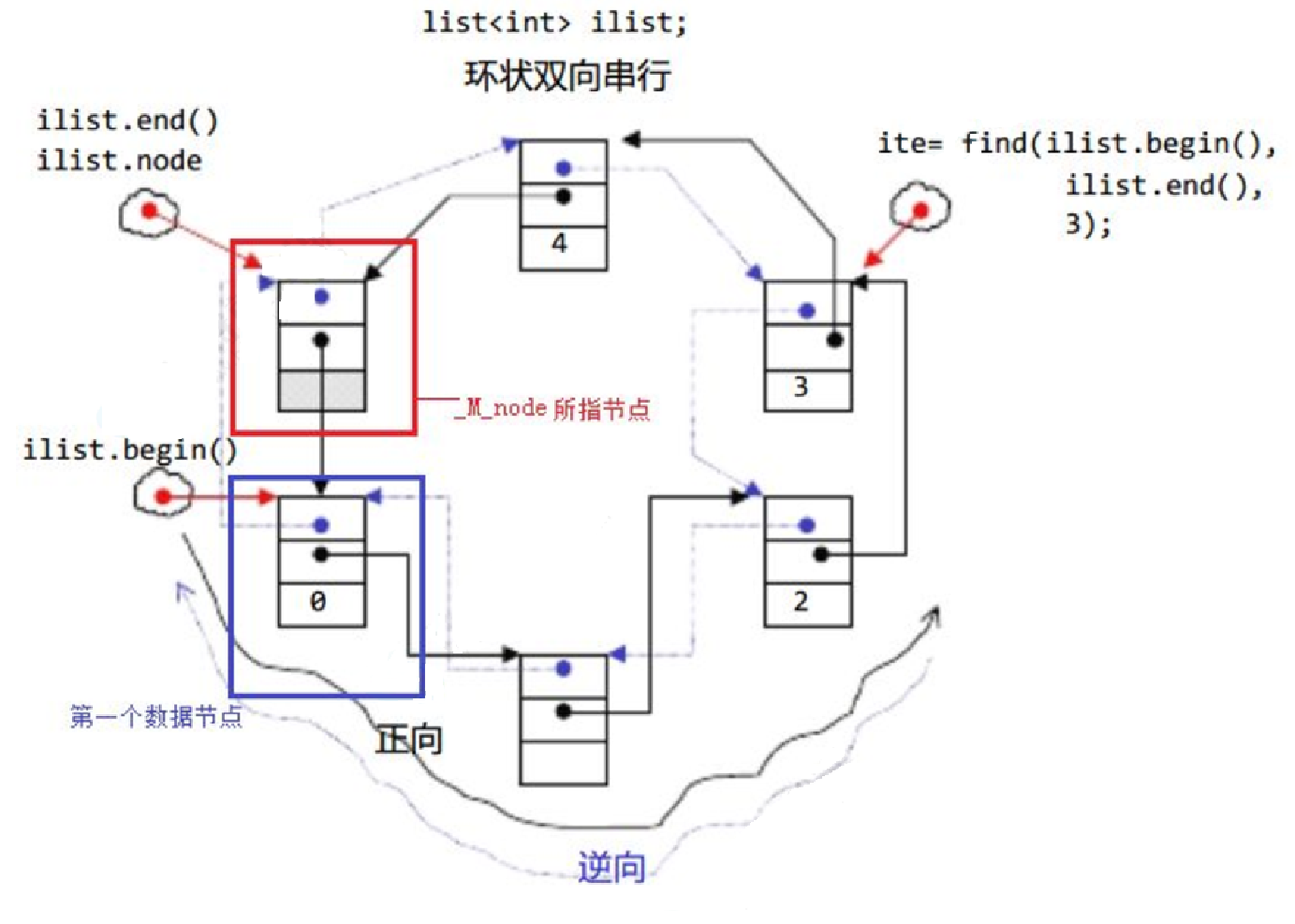
list的迭代器失效和vector类似,前面说过,此处大家可将迭代器暂时理解成类似于指针,迭代器失效即迭代器所指向的节点的无效,即该节点被删除了。因为list的底层结构为带头结点的双向循环链表,因此在list中进行插入时是不会导致list的迭代器失效的,只有在删除时才会失效,并且失效的只是指向被删除节点的迭代器,其他迭代器不会受到影响
例:
错误写法:
void TestListIterator1()
{
    int array[] = { 1, 2, 3, 4, 5, 6, 7, 8, 9, 0 };
    list<int> l(array, array+sizeof(array)/sizeof(array[0]));
    auto it = l.begin();
    while (it != l.end())
    {
        // erase()函数执行后,it所指向的节点已被删除,因此it无效,在下一次使用it时,必须先给
        //其赋值
        l.erase(it);
        ++it;
    }
}
正确写法:
// 改正
void TestListIterator1()
{
    int array[] = { 1, 2, 3, 4, 5, 6, 7, 8, 9, 0 };
    list<int> l(array, array+sizeof(array)/sizeof(array[0]));
    auto it = l.begin();
    while (it != l.end())
    {
        l.erase(it++);
        it = l.erase(it);
    }
}
3 list的模拟实现
3.1 list 的实现
#pragma once
#include <iostream>
using namespace std;

namespace yjs
{
	template<class T>
	struct ListNode
	{
        ListNode(const T& value =T())
			:_data(value)
			,_next(nullptr)
			,_prev(nullptr)
		{

		}
		T _data;
        ListNode<T>* _next;
        ListNode<T>* _prev;
	};

    //List的迭代器类
    template<class T, class Ref, class Ptr>
    struct ListIterator
    {
        typedef ListNode<T>* PNode;
        typedef ListIterator<T, Ref, Ptr> Self;
        ListIterator(PNode pNode = nullptr)
        {
            _pNode = pNode;
        }
        ListIterator(const Self& l)
        {
            _pNode = l._pNode;
        }
        T& operator*()
        {
            return _pNode->_data;
        }
        T* operator->()
        {
            return &(_pNode->_data);
        }
        Self& operator++()
        {
            _pNode = _pNode->_next;
            return *this;
        }
        Self operator++(int)
        {
            _pNode = _pNode->_next;
            return *this;
        }
        Self& operator--()
        {
            _pNode = _pNode->_prev;
            return *this;
        }
        Self operator--(int)
        {
            _pNode = _pNode->_prev;
            return *this;
        }
        bool operator!=(const Self& l)
        {
            return _pNode != l._pNode;
        }
        bool operator==(const Self& l)
        {
            return _pNode == l._pNode;
        }
        PNode _pNode;
    };

    //list类
    template<class T>
    class list
    {
        typedef ListNode<T> Node;
        typedef Node* PNode;
    public:
        typedef ListIterator<T, T&, T*> iterator;
        typedef ListIterator<T, const T&, const T*> const_iterator;
    public:
        ///////////////////////////////////////////////////////////////
        // List的构造
        list()
        {
            _pHead = new Node[1];
            _pHead->_next = _pHead;
            _pHead->_prev = _pHead;

        }
        list(int n, const T& value = T())
        {
            for (int i = 0; i < n; i++)
            {
                Node* newnode = new Node(value);
                Node* tail = _pHead->_prev;
                tail->_next = newnode;
                newnode->_prev = tail;
                newnode->_next = _pHead;
                _pHead->_prev = newnode;
            }
        }
        template <class Iterator>
        list(Iterator first, Iterator last)
        {
            _pHead = new Node(T());
            Iterator cur = first;
            while (cur!=last)
            {
                Node* newnode = new Node(*cur);
                Node* tail = _pHead->_prev;
                tail->_next = newnode;
                newnode->_prev = tail;
                newnode->_next = _pHead;
                _pHead->_prev = newnode;
                cur++;
            }
            Node* newnode = new Node(*last);
            Node* tail = _pHead->_prev;
            tail->_next = newnode;
            newnode->_prev = tail;
            newnode->_next = _pHead;
            _pHead->_prev = newnode;
        }

        list(const list<T>& l)
        {
            _pHead = new Node(T());
            Node* cur = l._pHead->next;
            while (cur != l.pHead)
            {
                Node* newnode = new Node(cur->_data);
                Node* tail = _pHead->_prev;
                tail->_next = newnode;
                newnode->_prev = tail;
                newnode->_next = _pHead;
                _pHead->_prev = newnode;
                cur = cur->_next;
            }
        }

        list<T>& operator=(const list<T> l)
        {
            Node* cur = _pHead->_next;
            while (cur != _pHead)
            {
                Node* next = cur->_next;
                delete cur;
                cur = next;
            }
            delete _pHead;

            _pHead = new Node(T());
            cur = l._pHead->next;
            while (cur != l.pHead)
            {
                Node* newnode = new Node(cur->_data);
                Node* tail = _pHead->_prev;
                tail->_next = newnode;
                newnode->_prev = tail;
                newnode->_next = _pHead;
                _pHead->_prev = newnode;
                cur = cur->_next;
            }
        }

        ~list()
        {
            Node* cur = _pHead->_next;
            while (cur!=_pHead)
            {
                Node* next = cur->_next;
                delete cur;
                cur = next;
            }
            delete cur;
        }


        ///////////////////////////////////////////////////////////////
        // List Iterator
        iterator begin()
        {
            return { _pHead->_next};
        }
        iterator end()
        {
            return { _pHead };
        }
        const_iterator cbegin()
        {
            return { _pHead->_next };
        }
        const_iterator cend()
        {
            return { _pHead };
        }


        ///////////////////////////////////////////////////////////////
        // List Capacity
        size_t size()const
        {
            int i = 0;
            Node* cur = _pHead->_next;
            while (cur != _pHead)
            {
                i++;
                cur = cur->next;
            }
        }
        bool empty()const
        {
            return _pHead == _pHead->_next;
        }


        ////////////////////////////////////////////////////////////
        // List Access
        T& front()
        {
            return _pHead->_next->_date;
        }
        const T& front()const
        {
            return _pHead->_next->_date;
        }
        T& back()
        {
            return _pHead->_prev->_date;
        }
        const T& back()const
        {
            return _pHead->_prev->_date;
        }


        ////////////////////////////////////////////////////////////
        // List Modify
        void push_back(const T& val)
        {
            insert(end(), val);
        }
        void pop_back()
        {
            erase(--end());
        }
        void push_front(const T& val)
        {
            insert(begin(), val);
        }
        void pop_front()
        {
            erase(begin());
        }
        // 在pos位置前插入值为val的节点
        iterator insert(iterator pos, const T& val)
        {
            Node* newnode = new Node(val);
            Node* prev = pos._pNode->_prev;
            prev->_next = newnode;
            newnode->_next = pos._pNode;
            newnode->_prev = prev;
            pos._pNode->_prev = newnode;
            return { newnode };
        }
        // 删除pos位置的节点,返回该节点的下一个位置
        iterator erase(iterator pos)
        {
            Node* prev = pos._pNode->_prev;
            Node* next = pos._pNode->_next;
            prev->_next = next;
            next->_prev= prev;
            delete pos._pNode;
            return { next };
        }
        void clear()
        {
            Node* cur = _pHead->_next;
            while (cur != _pHead)
            {
                Node* next = cur->_next;
                delete cur;
                cur = next;
            }
            _pHead->_next = _pHead;
            _pHead->_prev = _pHead;

        }
        void swap(list<T>& l)
        {
            PNode temp = l._pHead;
            l._pHead = _pHead;
            _pHead = temp;
        }
    private:

        PNode _pHead;
    };

}
拓展: 3.2 list 反向迭代器的实现
#pragma once

namespace yjs
{
	template<class Iterator, class Ref, class Ptr >
	struct ReverseIterator
	{
		typedef ReverseIterator<Iterator, Ref, Ptr> Self;
		ReverseIterator(Iterator it)
			:_it(it)
		{

		}
		Ref operator*()
		{
			Iterator temp = _it;
			--temp;
			return *temp;
		}
		Ptr operator->()
		{
			return &(operator*());
		}

		Self& operator++()
		{
			--_it;
			return *this;
		}

		Self& operator--()
		{
			++_it;
			return *this;
		}

		bool operator!=(Self it)
		{
			return _it != it._it;
		}

		bool operator==(Self it)
		{
			return _it == it._it;
		}

		Iterator _it;
	};
}
反向迭代器的原理就是让原来正向迭代器的--变为反向迭代器的++,实现用了适配器的思想,这个思想会在后面学习stack和queue的时候详细介绍现在只单纯了解
4 list和vector的对比
vector与list都是STL中非常重要的序列式容器,由于两个容器的底层结构不同,导致其特性以及
应用场景不同,其主要不同如下:
| 对比维度 | vector | list |
|---|---|---|
| 底层结构 | 动态顺序表,占用一段连续内存空间 | 带头结点的双向循环链表 |
| 随机访问 | 支持随机访问,下标访问元素时间复杂度 O (1) | 不支持随机访问,遍历查找元素 O (N) |
| 插入和删除 | 任意位置增删效率低,需要挪动大量元素,复杂度 O (N)。扩容还需开辟新空间、拷贝释放旧空间,开销更大 | 任意位置增删效率高,仅修改指针指向,无需移动元素,复杂度 O (1) |
| 空间利用率 | 连续内存,不易产生内存碎片,空间利用率高,CPU 缓存命中率高 | 节点零散动态分配,易造成内存碎片,空间利用率低,缓存命中率差 |
| 迭代器本质 | 原生指针 | 对链表节点指针进行封装的迭代器,加入了方法 |
| 迭代器失效规则 | 插入可能触发扩容,导致全部迭代器失效。删除仅当前迭代器失效 | 插入操作迭代器均不失效。删除仅被删除元素对应的迭代器失效,其余不受影响 |
| 适用场景 | 需要随机访问、看重缓存效率、较少中间插入删除,追求高效连续存储 | 频繁在任意位置插入 / 删除元素,不需要随机访问功能 |
更多推荐
 5
5 0
0- 0


 已为社区贡献4条内容

所有评论(0)