
Dubbo流量控制全攻略:构建高可用微服务架构的流量治理策略
全面解析Dubbo流量控制机制,从基础到高级策略,保障微服务稳定运行
文章目录
引言
在微服务架构中,流量控制就像城市交通管理系统 🚦,没有合理的流量调度和管控,再好的道路设计也会陷入瘫痪。想象一下,双十一期间淘宝需要处理数十亿次服务调用,春节期间12306需要应对每秒百万级的票务查询,如果没有有效的流量控制,系统将在瞬间崩溃。
Dubbo作为阿里巴巴开源的分布式服务框架,提供了一套完整的流量控制解决方案。本文将深入剖析Dubbo中的各种流量控制策略,帮助你构建稳定、可靠的微服务系统。
一、Dubbo流量控制概述 🎯
1.1 什么是流量控制?
流量控制是指通过一系列技术手段,对微服务间的调用流量进行管理和调度,确保系统在高压环境下仍能保持稳定运行。
1.2 流量控制的重要性
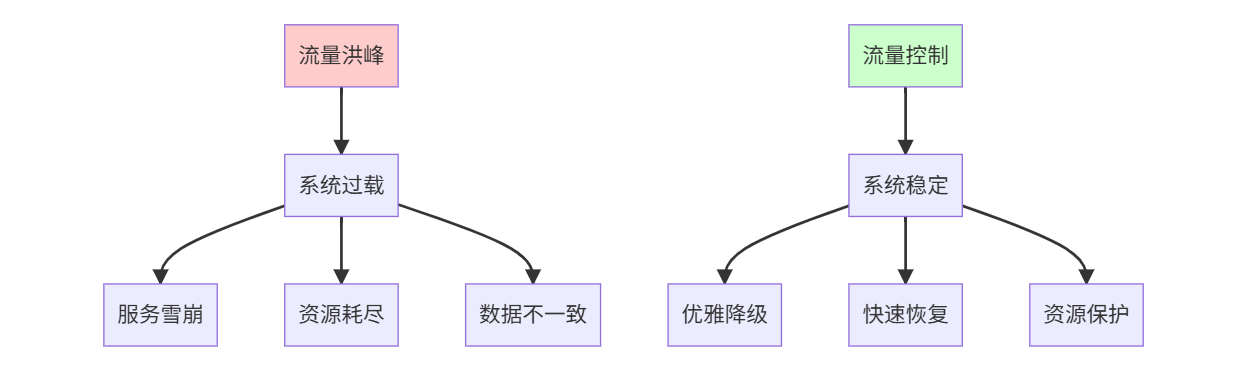
1.3 Dubbo流量控制体系
Dubbo提供了多层次、多维度的流量控制机制:
| 控制层面 | 控制手段 | 适用场景 |
|---|---|---|
| 服务级别 | 并发控制、TPS限流 | 服务保护 |
| 方法级别 | 方法级限流、熔断 | 精细控制 |
| 集群级别 | 负载均衡、容错 | 集群治理 |
| 系统级别 | 自适应限流、连接控制 | 系统保护 |
二、负载均衡策略 ⚖️
2.1 负载均衡核心作用
负载均衡是Dubbo中最基础的流量控制手段,它决定了服务消费者如何从多个提供者中选择一个进行调用。
2.2 内置负载均衡算法
2.2.1 随机策略(Random)
/**
 * 随机负载均衡实现原理
 */
public class RandomLoadBalance extends AbstractLoadBalance {

    @Override
    protected <T> Invoker<T> doSelect(List<Invoker<T>> invokers, URL url, Invocation invocation) {
        int length = invokers.size();
        boolean sameWeight = true;
        int[] weights = new int[length];
        int totalWeight = 0;

        // 计算权重和总权重
        for (int i = 0; i < length; i++) {
            int weight = getWeight(invokers.get(i), invocation);
            weights[i] = weight;
            totalWeight += weight;
            if (sameWeight && i > 0 && weight != weights[i - 1]) {
                sameWeight = false;
            }
        }

        // 根据权重随机选择
        if (totalWeight > 0 && !sameWeight) {
            int offset = ThreadLocalRandom.current().nextInt(totalWeight);
            for (int i = 0; i < length; i++) {
                offset -= weights[i];
                if (offset < 0) {
                    return invokers.get(i);
                }
            }
        }

        // 权重相同,完全随机
        return invokers.get(ThreadLocalRandom.current().nextInt(length));
    }
}
配置方式:
<dubbo:reference interface="com.example.UserService" loadbalance="random" />
@DubboReference(loadbalance = "random")
private UserService userService;
2.2.2 轮询策略(RoundRobin)
/**
 * 加权轮询负载均衡
 */
public class RoundRobinLoadBalance extends AbstractLoadBalance {

    private final ConcurrentMap<String, AtomicPositiveInteger> sequences =
        new ConcurrentHashMap<>();

    @Override
    protected <T> Invoker<T> doSelect(List<Invoker<T>> invokers, URL url, Invocation invocation) {
        String key = invokers.get(0).getUrl().getServiceKey() + "." + invocation.getMethodName();
        int length = invokers.size();
        int maxWeight = 0;
        int minWeight = Integer.MAX_VALUE;
        final List<Invoker<T>> invokerToWeightList = new ArrayList<>();

        // 计算权重范围
        for (int i = 0; i < length; i++) {
            int weight = getWeight(invokers.get(i), invocation);
            maxWeight = Math.max(maxWeight, weight);
            minWeight = Math.min(minWeight, weight);
            if (weight > 0) {
                invokerToWeightList.add(invokers.get(i));
            }
        }

        // 获取当前序列号
        AtomicPositiveInteger sequence = sequences.get(key);
        if (sequence == null) {
            sequences.putIfAbsent(key, new AtomicPositiveInteger());
            sequence = sequences.get(key);
        }
        int currentSequence = sequence.getAndIncrement();

        // 根据权重选择Invoker
        if (maxWeight > 0 && minWeight < maxWeight) {
            int mod = currentSequence % totalWeight;
            for (int i = 0; i < maxWeight; i++) {
                for (Invoker<T> invoker : invokerToWeightList) {
                    if (mod == 0 && getWeight(invoker, invocation) > 0) {
                        return invoker;
                    }
                    mod--;
                }
            }
        }

        // 普通轮询
        return invokers.get(currentSequence % length);
    }
}
2.2.3 最少活跃调用策略(LeastActive)
# 最少活跃调用配置
dubbo:
  consumer:
    loadbalance: leastactive
  provider:
    weight: 200  # 高性能实例权重更高
2.2.4 一致性哈希策略(ConsistentHash)
@DubboReference(
    loadbalance = "consistenthash",
    parameters = {"hash.nodes", "160"}
)
private OrderService orderService;
2.3 负载均衡策略对比
| 策略类型 | 优点 | 缺点 | 适用场景 |
|---|---|---|---|
| Random | 实现简单,分布均匀 | 不考虑服务器状态 | 各服务器性能相近 |
| RoundRobin | 请求分配均匀 | 无法感知服务器负载 | 长连接,性能均匀 |
| LeastActive | 动态感知负载 | 实现相对复杂 | 服务器性能差异大 |
| ConsistentHash | 支持有状态服务 | 配置复杂 | 需要会话保持 |
三、服务限流策略 🚦
3.1 并发数控制
3.1.1 服务提供者并发控制
服务级别控制:
<dubbo:service interface="com.example.UserService" executes="100" />
方法级别控制:
<dubbo:service interface="com.example.UserService">
    <dubbo:method name="getUser" executes="50" />
    <dubbo:method name="updateUser" executes="30" />
</dubbo:service>
注解配置:
@DubboService(executes = 100, methods = {
    @Method(name = "getUser", executes = 50),
    @Method(name = "updateUser", executes = 30)
})
public class UserServiceImpl implements UserService {
    // 服务实现
}
3.1.2 服务消费者并发控制
<dubbo:reference interface="com.example.UserService" actives="50">
    <dubbo:method name="getUser" actives="20" />
</dubbo:reference>
3.2 TPS限流控制
/**
 * TPS限流过滤器
 */
@Activate(group = Constants.PROVIDER)
public class TpsLimitFilter implements Filter {

    private final TPSLimiter tpsLimiter = new DefaultTPSLimiter();

    @Override
    public Result invoke(Invoker<?> invoker, Invocation invocation) throws RpcException {
        if (!tpsLimiter.isAllowable(invoker.getUrl(), invocation)) {
            throw new RpcException("Failed to invoke service " +
                invoker.getInterface().getName() +
                ", method: " + invocation.getMethodName() +
                ", cause: The service is limited by tps.");
        }
        return invoker.invoke(invocation);
    }
}
配置方式:
<dubbo:service interface="com.example.UserService" filter="tpsLimitFilter">
    <dubbo:parameter key="tps" value="100" />
    <dubbo:parameter key="tps.interval" value="60000" />
</dubbo:service>
3.3 自适应限流
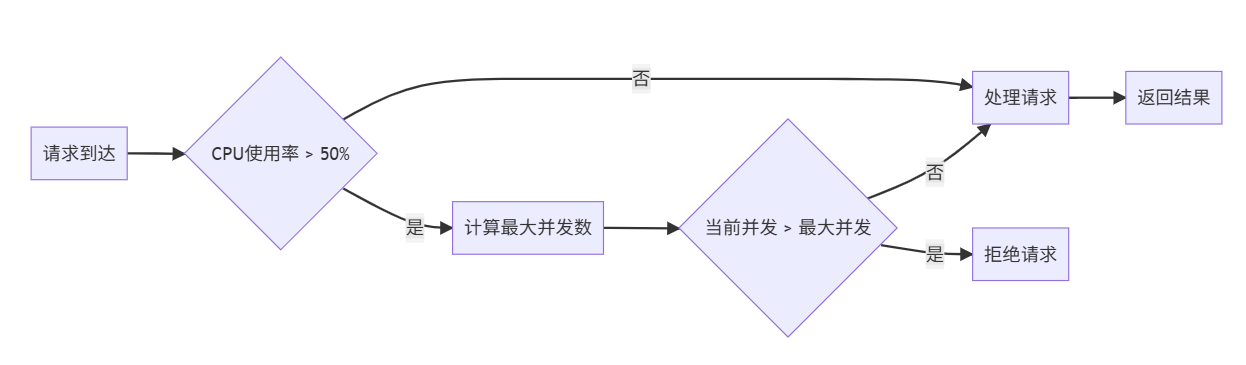
Dubbo提供了智能的自适应限流策略,能够根据系统负载自动调整限流阈值。
3.3.1 启发式平滑限流
# 启用启发式平滑限流
dubbo.provider.flowcontrol=heuristicSmoothingFlowControl
工作原理:
3.3.2 自动并发限制器
dubbo:
  provider:
    flowcontrol: autoConcurrencyLimiter
    parameters:
      exploreRatio: 0.2  # 探索比率
四、熔断降级策略 🔄
4.1 熔断器模式
熔断器类似于电路保险丝,在服务出现故障时自动切断请求,防止故障蔓延。
4.1.1 熔断器状态机

4.1.2 Dubbo集成Hystrix
添加依赖:
<dependency>
    <groupId>org.springframework.cloud</groupId>
    <artifactId>spring-cloud-starter-netflix-hystrix</artifactId>
    <version>2.2.10.RELEASE</version>
</dependency>
服务配置:
@Service
public class UserServiceImpl implements UserService {

    @HystrixCommand(
        fallbackMethod = "getUserFallback",
        commandProperties = {
            @HystrixProperty(name = "circuitBreaker.requestVolumeThreshold", value = "20"),
            @HystrixProperty(name = "circuitBreaker.sleepWindowInMilliseconds", value = "5000"),
            @HystrixProperty(name = "circuitBreaker.errorThresholdPercentage", value = "50")
        }
    )
    @Override
    public User getUserById(Long userId) {
        // 业务逻辑
        return userMapper.selectById(userId);
    }

    // 降级方法
    public User getUserFallback(Long userId) {
        return User.defaultUser();
    }
}
4.2 集群容错策略
Dubbo提供了多种集群容错策略,在服务调用失败时进行相应的处理。
4.2.1 Failover策略(默认)
/**
 * 失败自动切换策略
 */
public class FailoverClusterInvoker<T> extends AbstractClusterInvoker<T> {

    @Override
    public Result doInvoke(Invocation invocation, List<Invoker<T>> invokers,
                          LoadBalance loadbalance) throws RpcException {
        // 获取重试次数
        int retries = getUrl().getMethodParameter(
            invocation.getMethodName(), Constants.RETRIES_KEY, Constants.DEFAULT_RETRIES);

        RpcException le = null;
        List<Invoker<T>> invoked = new ArrayList<>(invokers.size());

        // 重试机制
        for (int i = 0; i <= retries; i++) {
            Invoker<T> invoker = select(loadbalance, invocation, invokers, invoked);
            invoked.add(invoker);
            try {
                return invoker.invoke(invocation);
            } catch (RpcException e) {
                le = e;
            }
        }

        throw new RpcException("Failed to invoke method ...");
    }
}
配置方式:
<dubbo:reference interface="com.example.UserService" cluster="failover" retries="2" />
4.2.2 其他容错策略
| 策略 | 配置值 | 描述 | 适用场景 |
|---|---|---|---|
| Failfast | failfast | 快速失败,只发起一次调用 | 非幂等操作 |
| Failsafe | failsafe | 失败安全,忽略异常 | 日志记录、监控 |
| Failback | failback | 失败自动恢复,定时重试 | 消息通知 |
| Forking | forking | 并行调用多个服务器 | 实时性要求高 |
五、连接控制策略 🔗
5.1 连接数限制
5.1.1 服务提供者连接控制
<dubbo:protocol name="dubbo" port="20880" accepts="1000" />
5.1.2 服务消费者连接控制
<dubbo:reference interface="com.example.UserService" connections="5" />
5.2 连接管理策略
dubbo:
  protocol:
    name: dubbo
    # 连接池配置
    pool-size: 200
    max-active: 1000
    max-idle: 50
    min-idle: 10
    # 连接超时配置
    connect-timeout: 3000
    disconnect-timeout: 10000
六、高级流量控制特性 🚀
6.1 服务路由规则
6.1.1 条件路由
# 条件路由配置
scope: application
key: demo-application
enabled: true
force: false
runtime: true
conditions:
  - method=getUser => host=192.168.1.100
  - host=192.168.1.10 => host=192.168.1.101,192.168.1.102
6.1.2 标签路由
// 设置请求标签
RpcContext.getContext().setAttachment("dubbo.tag", "gray");

// 服务提供者配置
@DubboService(tag = "gray")
public class UserServiceImpl implements UserService {
    // 服务实现
}
6.2 参数验证与控制
@DubboService(validation = "true")
public class UserServiceImpl implements UserService {

    @Override
    @Method(validation = "true")
    public User getUser(@NotNull Long userId) {
        // 参数自动验证
        return userMapper.selectById(userId);
    }
}
6.3 优雅停机
/**
 * 优雅停机处理器
 */
@Component
public class GracefulShutdownHandler implements ApplicationListener<ContextClosedEvent> {

    @Autowired
    private Protocol protocol;

    @Override
    public void onApplicationEvent(ContextClosedEvent event) {
        // 1. 标记服务为不接收新请求
        protocol.destroy();

        // 2. 等待处理中的请求完成
        try {
            Thread.sleep(10000); // 等待10秒
        } catch (InterruptedException e) {
            Thread.currentThread().interrupt();
        }

        // 3. 强制关闭
        System.exit(0);
    }
}
七、实战配置案例 🛠️
7.1 电商系统流量控制配置
# application.yml 完整配置示例
dubbo:
  application:
    name: eshop-service
    qos-enable: true
    qos-port: 22222
  registry:
    address: zookeeper://127.0.0.1:2181
    check: false
  protocol:
    name: dubbo
    port: 20880
    accepts: 1000
    threads: 500
    queues: 0
  provider:
    # 限流配置
    filter: tpsLimitFilter,executeLimitFilter
    executes: 200
    flowcontrol: heuristicSmoothingFlowControl
    # 熔断配置
    cluster: failover
    retries: 2
    timeout: 3000
  consumer:
    # 负载均衡
    loadbalance: leastactive
    actives: 100
    connections: 10
    # 集群容错
    cluster: failover
    retries: 1
    check: false

# 服务级别配置
services:
  user-service:
    interface: com.eshop.user.UserService
    executes: 300
    methods:
      getUser:
        executes: 100
        timeout: 1000
      updateUser:
        executes: 50
        timeout: 5000
  order-service:
    interface: com.eshop.order.OrderService
    filter: tpsLimitFilter
    parameters:
      tps: 500
      tps.interval: 60000
7.2 微服务网格集成
/**
 * 与Service Mesh集成的流量控制
 */
@Configuration
@EnableDubbo
public class MeshIntegrationConfig {

    @Bean
    public ApplicationConfig applicationConfig() {
        ApplicationConfig config = new ApplicationConfig();
        config.setName("mesh-integration-app");
        config.setQosEnable(true);
        return config;
    }

    @Bean
    public ProtocolConfig protocolConfig() {
        ProtocolConfig config = new ProtocolConfig();
        config.setName("tri"); // 使用Triple协议
        config.setPort(50051);
        config.setCorethreads(100);
        config.setThreads(500);
        return config;
    }

    @Bean
    public RegistryConfig registryConfig() {
        RegistryConfig config = new RegistryConfig();
        config.setAddress("nacos://127.0.0.1:8848");
        config.setParameters(Collections.singletonMap("side", "consumer"));
        return config;
    }
}
八、监控与调优 📊
8.1 监控指标收集
/**
 * 流量控制监控指标
 */
@Component
public class TrafficControlMetrics {

    private final MeterRegistry meterRegistry;

    // 限流指标
    public void recordRateLimit(String service, String method, boolean limited) {
        Counter counter = Counter.builder("dubbo.rate_limit")
            .tag("service", service)
            .tag("method", method)
            .tag("limited", String.valueOf(limited))
            .register(meterRegistry);
        counter.increment();
    }

    // 熔断指标
    public void recordCircuitBreaker(String service, String state) {
        Gauge.builder("dubbo.circuit_breaker_state")
            .tag("service", service)
            .tag("state", state)
            .register(meterRegistry);
    }

    // 负载均衡指标
    public void recordLoadBalance(String service, String algorithm, String selected) {
        Counter.builder("dubbo.load_balance_selection")
            .tag("service", service)
            .tag("algorithm", algorithm)
            .tag("selected", selected)
            .register(meterRegistry)
            .increment();
    }
}
8.2 性能调优建议
8.2.1 线程池调优
dubbo:
  protocol:
    # 根据业务特点调整线程池
    threadpool: fixed
    corethreads: 100
    threads: 500
    queues: 0  # 无队列,快速失败
    # IO优化
    iothreads: 16
    buffer: 16384
8.2.2 超时与重试优化
@DubboReference(
    timeout = 1000,
    retries = 2,
    cluster = "failfast",  // 非幂等操作使用快速失败
    methods = {
        @Method(name = "getUser", timeout = 500, retries = 1),
        @Method(name = "updateUser", timeout = 3000, retries = 0)
    }
)
private UserService userService;
九、最佳实践总结 📝
9.1 流量控制策略选择
| 场景 | 推荐策略 | 配置要点 |
|---|---|---|
| 高并发读服务 | 随机负载均衡 + TPS限流 | loadbalance=random, tps=500 |
| 写服务 | 最少活跃数 + 熔断降级 | loadbalance=leastactive, cluster=failfast |
| 有状态服务 | 一致性哈希 + 连接控制 | loadbalance=consistenthash, connections=5 |
| 实时服务 | Forking集群 + 快速失败 | cluster=forking, timeout=1000 |
9.2 配置检查清单
/**
 * 流量控制配置验证
 */
@Component
public class TrafficControlValidator {

    public void validateConfig(ApplicationConfig config) {
        List<String> warnings = new ArrayList<>();

        // 检查线程池配置
        if (config.getThreads() > 1000) {
            warnings.add("线程数超过1000,可能造成上下文切换开销");
        }

        // 检查重试配置
        if (config.getRetries() > 3) {
            warnings.add("重试次数过多,可能放大故障影响");
        }

        // 检查超时配置
        if (config.getTimeout() < 100) {
            warnings.add("超时时间过短,可能导致正常请求被误杀");
        }

        if (!warnings.isEmpty()) {
            log.warn("流量控制配置警告: {}", warnings);
        }
    }
}
9.3 故障处理预案
-
限流触发时:
- 记录详细日志,分析限流原因
- 考虑自动扩容或降级服务
- 通知运维人员关注系统负载
-
熔断开启时:
- 检查下游服务健康状况
- 验证降级逻辑是否正确执行
- 准备手动干预措施
-
负载不均时:
- 调整负载均衡策略
- 检查服务器健康状态
- 考虑服务实例扩容
总结
Dubbo提供了全面而强大的流量控制能力,从基础的负载均衡到高级的自适应限流,涵盖了微服务流量治理的各个方面。通过合理配置和运用这些策略,可以构建出高可用、高性能的微服务架构。
关键收获:
✅ 负载均衡是流量分配的基础,选择合适的策略很重要
✅ 服务限流保护系统免受过载影响,确保稳定性
✅ 熔断降级防止故障蔓延,提高系统韧性
✅ 连接控制优化资源使用,提升性能
✅ 监控调优持续改进配置,适应业务变化
架构师视角:流量控制不是一次性的配置工作,而是一个持续优化的过程。需要结合业务特点、系统负载和监控数据,不断调整和优化各种策略参数,才能构建出真正稳定可靠的微服务系统。
参考资料 📖
最佳实践提示:流量控制策略应该与业务场景紧密结合,建议先在测试环境充分验证,再逐步在生产环境推广。同时,建立完善的监控告警机制,确保能够及时发现和处理流量异常。
标签: Dubbo 流量控制 微服务 负载均衡 限流熔断 服务治理
更多推荐

 31
31 0
0- 0


 已为社区贡献31条内容

所有评论(0)