
【C++】一篇吃透容器适配器三件套:从stack/queue/priority_queue到deque底层
很多人第一次看到
priority_queue<int, vector<int>, greater<int>>这种类型声明时,脑子里只剩下一个问号:这东西到底包了几层?再加上deque这个“伪连续空间”一起登场,更是容易看了就忘。这篇文章会一步步把接口、例题、模拟实现和底层结构串在一起,让你下次再写这行代码时,不只是能编译通过,而是真正知道自己在用什么。
目录
4.4 为什么选择deque作为stack和queue的底层默认容器
1. stack的介绍和使用
1.1 stack的介绍
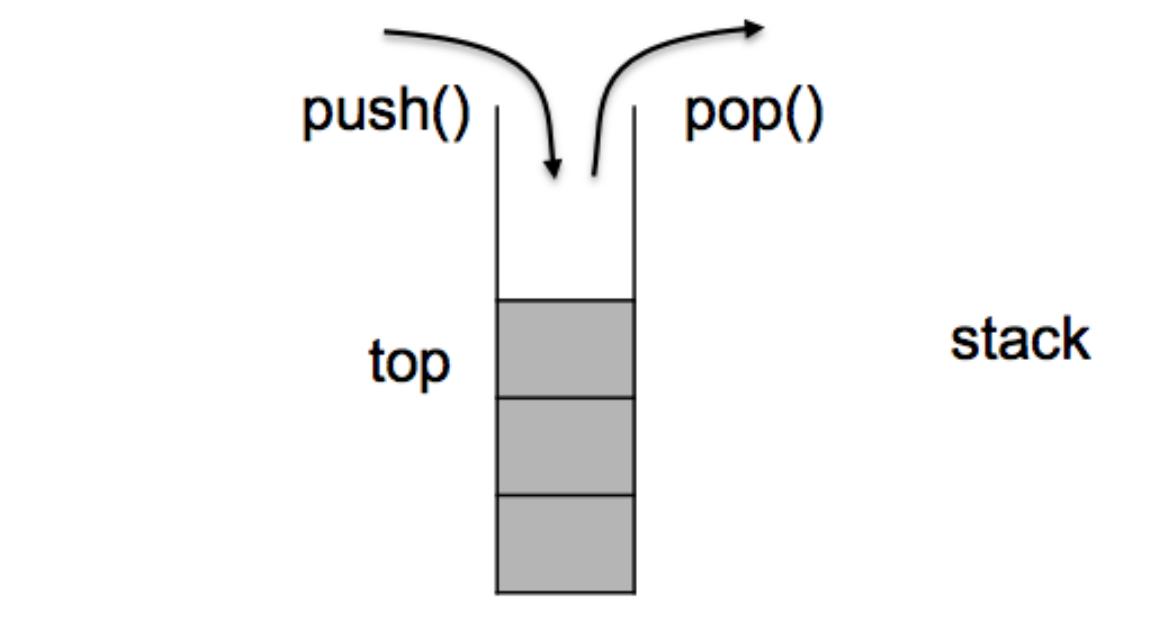
| 函数说明 | 接口说明 |
|---|---|
stack() | 构造一个空栈 |
empty() | 判断栈是否为空 |
size() | 返回栈中元素个数 |
top() | 返回栈顶元素的引用 |
push() | 把元素val压入栈顶 |
pop() | 把栈顶元素弹出(移除,不返回值) |
std::stack是一个后进先出(LIFO)的容器适配器:
-
只允许在一端(栈顶)进行插入和删除;
-
不支持遍历(没有迭代器),只有
push/pop/top这几个固定动作; -
底层可以用
vector、list、deque等线性结构来实现。
1.2 stack的使用
例题:
-
最小栈;
-
判断一个出栈序列是否可能;
-
逆波兰表达式求值。
1.2.1 最小栈(MinStack)
题目大意:
实现一个栈,除了正常的
push/pop/top以外,还要在O(1)时间拿到当前栈内的最小值getMin()。
思路:
-
用一个正常栈
_elem保存所有元素; -
再用一个辅助栈
_min保存“到当前位置为止的最小值链”:-
每次压入新元素
x时:-
_elem.push(x); -
若
_min为空或x <= _min.top(),就_min.push(x);
-
-
每次弹出时:
-
如果
_elem.top()等于_min.top(),辅助栈也要一起pop;
-
-
-
这样
_min.top()始终就是当前栈内最小值。
代码示例:
#include <stack>

class MinStack
{
public:
    void push(int x)
    {
        //只要压栈,先入_elem
        _elem.push(x);

        //如果_min为空或者x<=当前最小值,同步压入_min
        if (_min.empty() || x <= _min.top())
        {
            _min.push(x);
        }
    }

    void pop()
    {
        //如果当前出栈的元素正好等于当前最小值,辅助栈也要弹出
        if (_min.top() == _elem.top())
        {
            _min.pop();
        }
        _elem.pop();
    }

    int top()
    {
        return _elem.top();
    }

    int getMin()
    {
        return _min.top();
    }

private:
    //保存所有元素
    std::stack<int> _elem;
    //保存到当前位置为止的最小值链
    std::stack<int> _min;
};
1.2.2 栈的弹出压入序列
题目大意:
给定一个入栈序列
pushV和一个出栈序列popV,判断popV是否可能是pushV在某种合法入栈/出栈顺序下产生的弹出序列。
思路:
-
准备一个辅助栈
s,用它模拟真实入栈出栈过程; -
维护两个下标:
-
inIdx:当前入栈序列pushV用到了哪里; -
outIdx:当前要匹配的出栈序列popV位置;
-
-
对每个
popV[outIdx]:-
如果栈为空或栈顶不等于
popV[outIdx],就从pushV中继续push入栈;-
如果入栈序列已经用完还对不上,直接返回
false;
-
-
一旦栈顶等于
popV[outIdx],就pop一次,outIdx++;
-
-
最后如果能顺利匹配完整个
popV,说明出栈序列合法。
代码示例:
#include <vector>
#include <stack>
using namespace std;

class Solution
{
public:
    bool IsPopOrder(vector<int> pushV, vector<int> popV)
    {
        //入栈和出栈的元素个数必须相同
        if (pushV.size() != popV.size())
        {
            return false;
        }

        int outIdx = 0;
        int inIdx = 0;
        stack<int> s;

        while (outIdx < (int)popV.size())
        {
            //如果栈空或者栈顶!=当前要弹出的值,就继续入栈
            while (s.empty() || s.top() != popV[outIdx])
            {
                if (inIdx < (int)pushV.size())
                {
                    s.push(pushV[inIdx++]);
                }
                else
                {
                    //入栈序列已经用完还对不上,说明不可能
                    return false;
                }
            }

            //栈顶和当前要弹出的值相等,弹出
            s.pop();
            ++outIdx;
        }

        return true;
    }
};
1.2.3 逆波兰表达式求值
逆波兰表达式(RPN,Reverse Polish Notation)是一种不需要括号的表达式形式,例如:
-
中缀表达式:
(2 + 1) * 3 -
后缀表达式:
["2", "1", "+", "3", "*"]
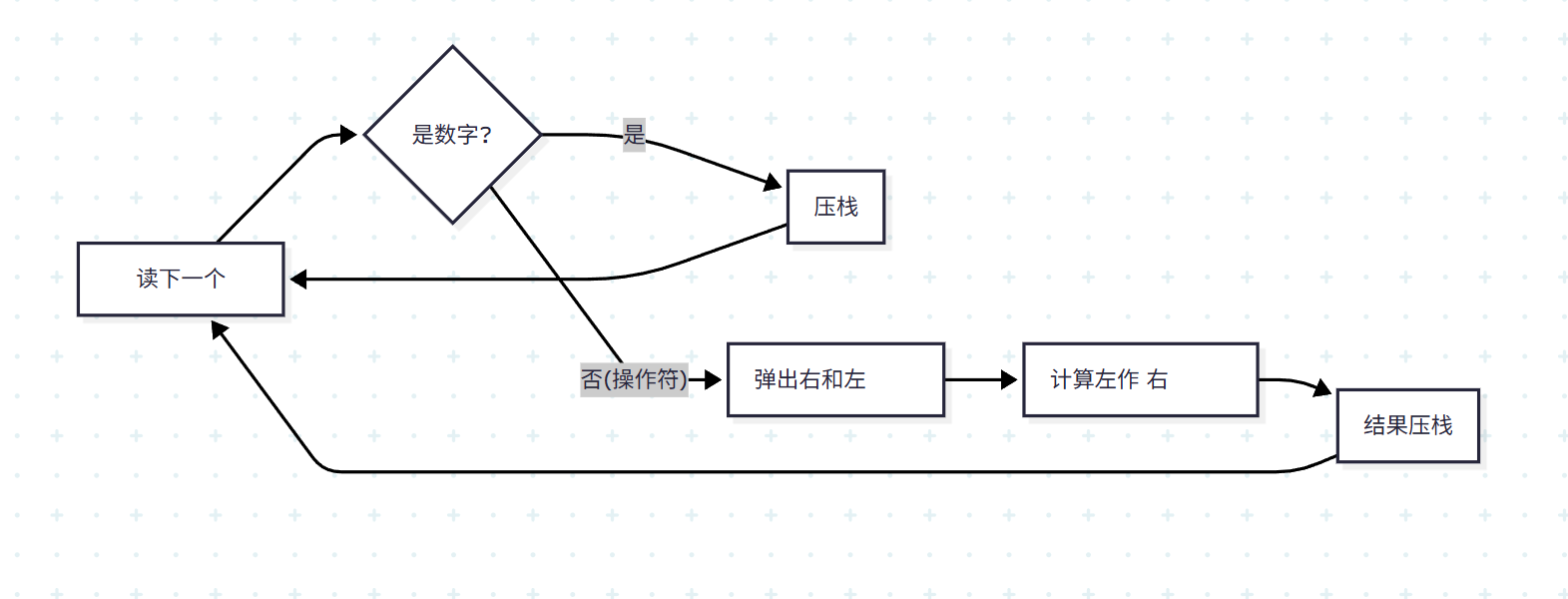
求值规则:
-
从左到右扫描令牌;
-
如果遇到数字,就压栈;
-
如果遇到操作符:
-
从栈中弹出两个数
right和left; -
按操作符计算
left op right; -
把结果再压回栈;
-
-
扫描结束后,栈顶就是最终结果。
代码示例:
#include <vector>
#include <stack>
#include <string>
#include <cstdlib>
using namespace std;

class Solution
{
public:
    int evalRPN(vector<string>& tokens)
    {
        stack<int> s;

        for (size_t i = 0; i < tokens.size(); ++i)
        {
            string& str = tokens[i];

            //如果是数字
            if (!("+" == str || "-" == str || "*" == str || "/" == str))
            {
                s.push(atoi(str.c_str()));
            }
            else
            {
                //如果是操作符
                int right = s.top();
                s.pop();
                int left = s.top();
                s.pop();

                switch (str[0])
                {
                case '+':
                    s.push(left + right);
                    break;
                case '-':
                    s.push(left - right);
                    break;
                case '*':
                    s.push(left * right);
                    break;
                case '/':
                    //题目说明了不存在除数为0的情况
                    s.push(left / right);
                    break;
                }
            }
        }

        return s.top();
    }
};
1.3 stack的模拟实现
观察stack的接口可以发现:它只需要在一端尾插/尾删,并能访问栈顶即可。因此任何支持push_back/pop_back/back的容器,都可以拿来当stack的底层,比如vector。
下面是一个用std::vector封装的简化版stack:
代码示例:
#include <vector>

namespace my
{
    template<class T>
    class stack
    {
    public:
        stack()
        {}

        void push(const T& x)
        {
            _c.push_back(x);
        }

        void pop()
        {
            _c.pop_back();
        }

        T& top()
        {
            return _c.back();
        }

        const T& top() const
        {
            return _c.back();
        }

        size_t size() const
        {
            return _c.size();
        }

        bool empty() const
        {
            return _c.empty();
        }

    private:
        std::vector<T> _c;
    };
}
2. queue的介绍和使用
2.1 queue的介绍
| 函数说明 | 接口说明 |
|---|---|
queue() | 构造空队列 |
empty() | 检测队列是否为空 |
size() | 返回队列中有效元素个数 |
front() | 返回队头元素的引用 |
back() | 返回队尾元素的引用 |
push() | 在队尾插入元素val(入队) |
pop() | 删除队头元素(出队,不返回值) |
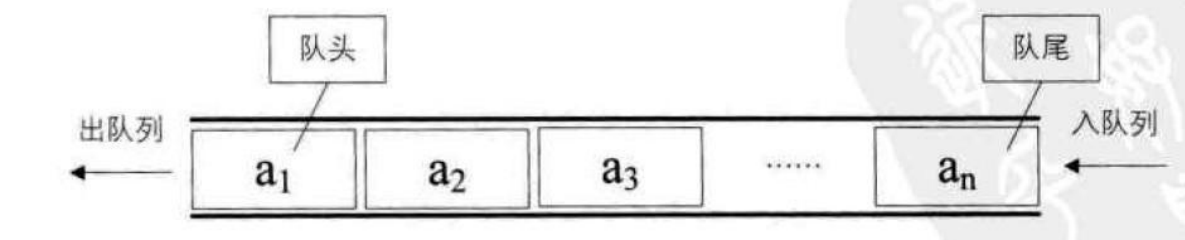
std::queue是一个先进先出(FIFO)的容器适配器:从队尾入,从队头出。
概念:
-
队列是一种容器适配器,用于在先进先出(FIFO)场景中操作元素:一端插入,另一端提取;
-
自己不直接存元素,而是把某个底层容器包起来,对外暴露
push/pop/front/back等接口; -
底层容器需要支持以下操作:
-
empty():检测是否为空; -
size():返回有效元素个数; -
front():访问队头; -
back():访问队尾; -
push_back():尾部插入; -
pop_front():头部删除;
-
-
标准容器
deque和list都满足这些要求; -
默认底层容器是
deque,如果不指定,queue<int>就等价于queue<int, deque<int>>。
2.2 queue的使用
代码示例:
#include <iostream>
#include <queue>
using namespace std;

void TestQueueUse()
{
    queue<int> q;

    q.push(1);
    q.push(2);
    q.push(3);

    cout << "front:" << q.front() << endl;
    cout << "back:" << q.back() << endl;

    while (!q.empty())
    {
        cout << q.front() << " ";
        q.pop();
    }
    cout << endl;
}
2.3 queue的模拟实现
队列的接口需要头删+尾插,如果用vector来封装,每次pop()都要把前面的元素搬一遍,效率很低;用list或deque就比较合适。
下面是一个用std::list做底层的简化queue:
代码示例:
#include <list>

namespace my
{
    template<class T>
    class queue
    {
    public:
        queue()
        {}

        void push(const T& x)
        {
            _c.push_back(x);
        }

        void pop()
        {
            _c.pop_front();
        }

        T& back()
        {
            return _c.back();
        }

        const T& back() const
        {
            return _c.back();
        }

        T& front()
        {
            return _c.front();
        }

        const T& front() const
        {
            return _c.front();
        }

        size_t size() const
        {
            return _c.size();
        }

        bool empty() const
        {
            return _c.empty();
        }

    private:
        std::list<T> _c;
    };
}
3. priority_queue的介绍和使用
3.1 priority_queue的介绍
priority_queue也是一个容器适配器(堆):
-
它保证
top()永远是内部元素里“最大(或最小)”的那个; -
插入元素可以随时做,但取元素只能从
top()取; -
底层会用
make_heap/push_heap/pop_heap等算法维护堆结构。
| 函数声明 | 接口说明 |
|---|---|
priority_queue() / (first,last) | 构造一个空的优先级队列或用区间元素构造一个优先级队列 |
empty() | 判断是否为空 |
size() | 返回有效元素个数 |
top() | 返回队列中“优先级最高”的元素引用(默认是最大值) |
push(x) | 插入元素x |
pop() | 删除“优先级最高”的元素(堆顶元素) |
总结:
-
priority_queue保证第一个元素始终是最大元素(默认); -
底层容器可以是任意支持随机访问迭代器的容器(如
vector/deque); -
默认底层容器是
vector; -
优先级队列在内部会自动调用
make_heap/push_heap/pop_heap维护堆; -
默认比较方式是
less<T>,所以默认是大根堆(最大值优先)。
3.2 priority_queue的使用
3.2.1 基本类型:大堆和小堆
代码示例:
#include <iostream>
#include <vector>
#include <queue>
#include <functional>
using namespace std;

void TestPriorityQueueInt()
{
    vector<int> v{ 3, 2, 7, 6, 0, 4, 1, 9, 8, 5 };

    //默认是大堆,底层用less比较
    priority_queue<int> q1;
    for (auto& e : v)
    {
        q1.push(e);
    }
    cout << q1.top() << endl;   //最大元素

    //如果要小堆,第三个模板参数换成greater
    priority_queue<int, vector<int>, greater<int>> q2(v.begin(), v.end());
    cout << q2.top() << endl;   //最小元素
}
-
第一种写法:
priority_queue<int>,默认大根堆; -
第二种写法:
priority_queue<int, vector<int>, greater<int>>,改成小根堆。
3.2.2 自定义类型
对于自定义类型,需要提供比较规则,默认使用less<T>,即需要operator<。如果要用greater<T>,则需要operator>。
代码示例:
#include <iostream>
#include <queue>
#include <vector>
#include <functional>
using namespace std;

class Date
{
public:
    Date(int year = 1900, int month = 1, int day = 1)
        : _year(year)
        , _month(month)
        , _day(day)
    {}

    bool operator<(const Date& d) const
    {
        return (_year < d._year) ||
            (_year == d._year && _month < d._month) ||
            (_year == d._year && _month == d._month && _day < d._day);
    }

    bool operator>(const Date& d) const
    {
        return (_year > d._year) ||
            (_year == d._year && _month > d._month) ||
            (_year == d._year && _month == d._month && _day > d._day);
    }

    friend ostream& operator<<(ostream& _cout, const Date& d)
    {
        _cout << d._year << "-" << d._month << "-" << d._day;
        return _cout;
    }

private:
    int _year;
    int _month;
    int _day;
};

void TestPriorityQueueDate()
{
    //大堆,需要提供<的重载
    priority_queue<Date> q1;
    q1.push(Date(2018, 10, 29));
    q1.push(Date(2018, 10, 28));
    q1.push(Date(2018, 10, 30));
    cout << q1.top() << endl;

    //小堆,需要提供>的重载
    priority_queue<Date, vector<Date>, greater<Date>> q2;
    q2.push(Date(2018, 10, 29));
    q2.push(Date(2018, 10, 28));
    q2.push(Date(2018, 10, 30));
    cout << q2.top() << endl;
}
3.3 在OJ中的使用
3.3.1 数组中第K个大的元素。
思路:
-
把所有元素丢进一个大根堆;
-
然后弹出前
k-1个最大值; -
此时堆顶就是第
k大的元素。
代码示例:
#include <vector>
#include <queue>
using namespace std;

class Solution
{
public:
    int findKthLargest(vector<int>& nums, int k)
    {
        //将数组中的元素先放入大根堆
        priority_queue<int> p(nums.begin(), nums.end());

        //弹出前k-1个
        for (int i = 0; i < k - 1; ++i)
        {
            p.pop();
        }

        return p.top();
    }
};
3.4 priority_queue的模拟实现
从结构上看,优先级队列底层就是一个堆 + 底层容器 + 比较器的组合:
-
容器负责存放元素;
-
堆算法负责维护堆序性;
-
比较器负责决定谁的优先级更高。
4. 容器适配器
4.1 什么是适配器
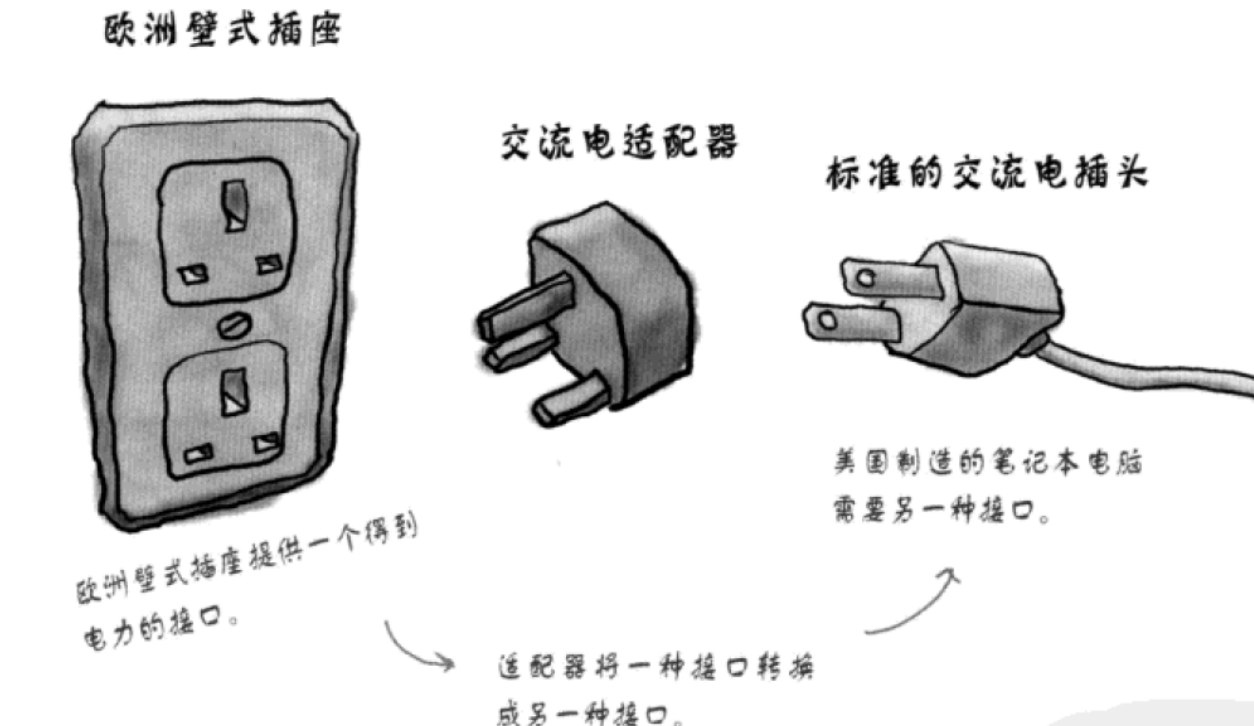
“适配器”是一种设计模式:把一个类的接口转换成客户希望的另一种接口。这样原来的类可以继续复用,只是对外长得不一样了。
STL里:
-
stack/queue/priority_queue都不直接管理底层数据结构; -
它们只是把
vector/list/deque这些容器“包装一下”,对外提供一个更符合使用场景的接口:-
stack对外:push/pop/top,隐藏遍历; -
queue对外:push/pop/front/back; -
priority_queue对外:push/pop/top,但内部是堆结构。
-
4.2 STL标准库中stack和queue的底层结构
虽然stack/queue也可以存元素,但在STL的分类里,它们不叫“容器”,而叫“容器适配器”。
原因就是:它们只是对其他容器的接口进行包装,把某些操作“隐藏掉”,只保留特定场景需要的那些。
标准库里的声明:
//stack
template<class T, class Container = std::deque<T>>
class stack;

//queue
template<class T, class Container = std::deque<T>>
class queue;
总结:
-
stack<int>其实是stack<int, deque<int>>; -
queue<int>其实是queue<int, deque<int>>; -
它们默认都是基于
deque实现的; -
可以改成
vector或list,只要满足接口要求即可。



4.3 deque的介绍
4.3.1 deque的原理
deque(double-ended queue,双端队列)是一种双开口的伪连续空间数据结构:
-
支持在头尾两端进行插入和删除,时间复杂度O(1);
-
和
vector相比:头插效率高,不需要整体搬移元素; -
和
list相比:空间利用率高,因为底层使用的是“分段连续空间”。
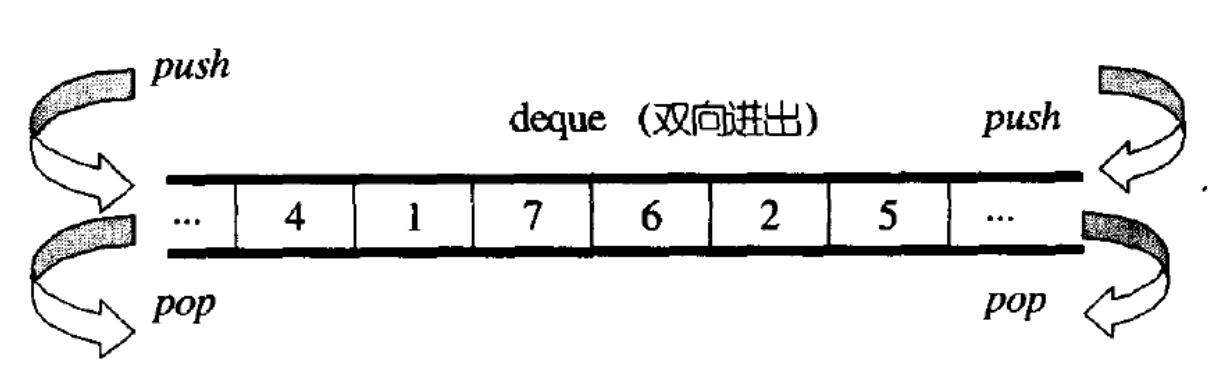
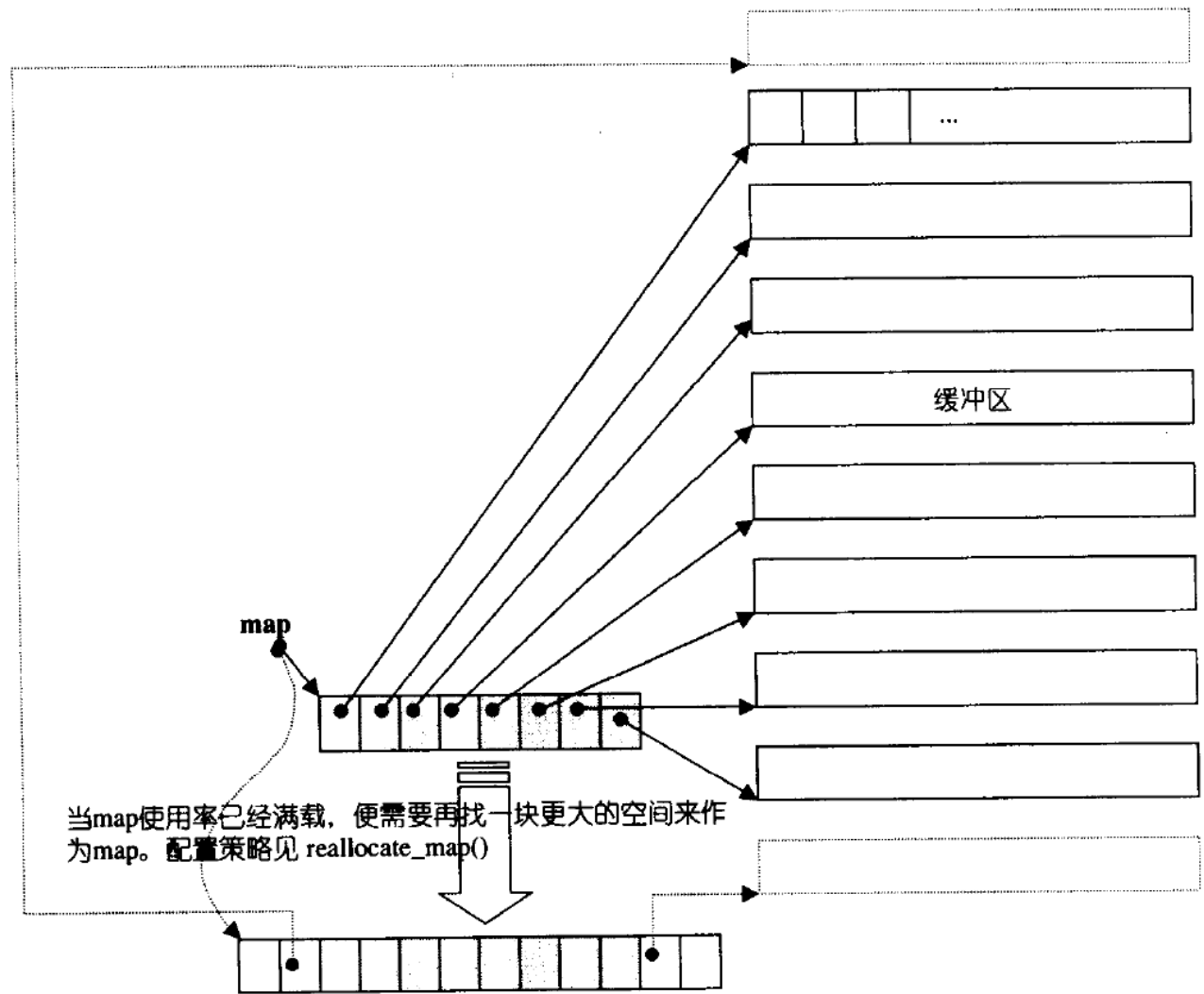
底层不是一整段连续内存,而是类似“动态二维数组”:
-
上层有一个
map(控制数组),存放指向“缓冲区(buffer)”的指针; -
每个缓冲区是一小段连续空间;
-
整个
deque就是多个缓冲区拼接起来形成的“逻辑连续空间”。
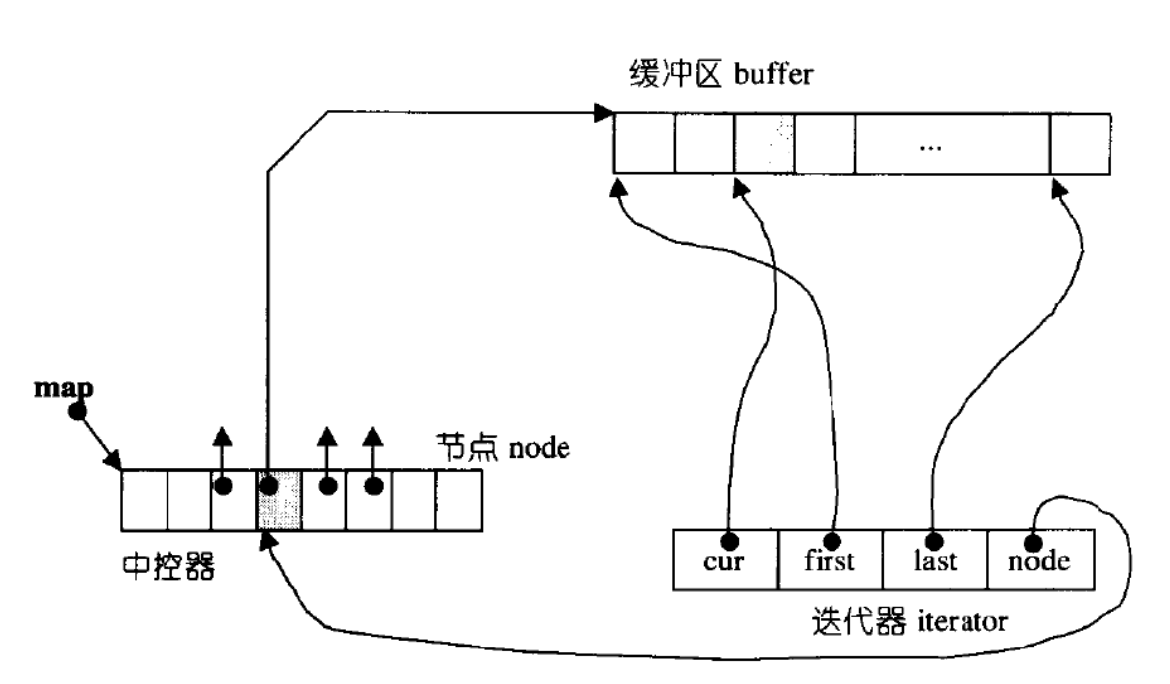
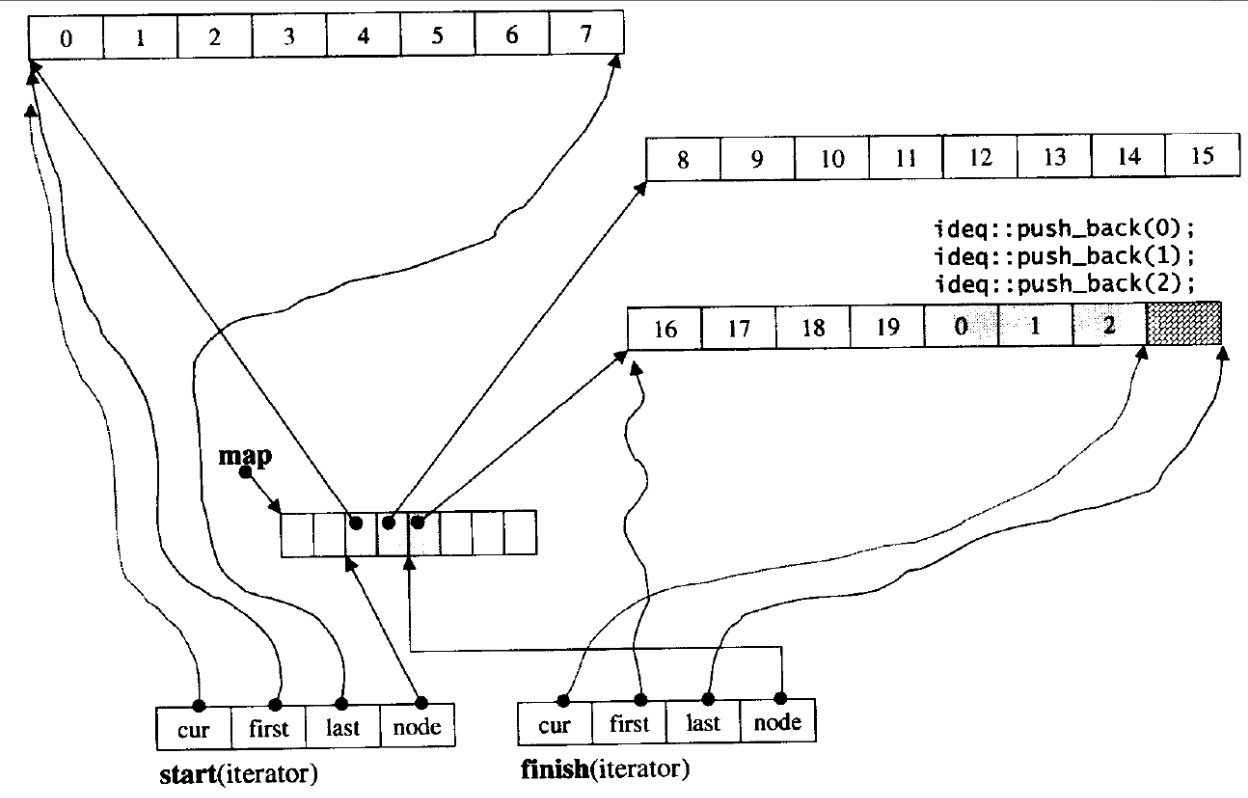
迭代器为了维持伪连续假象,会记录:
-
当前所在缓冲区指针
node; -
缓冲区的
first/last边界; -
当前元素位置
cur。
4.3.2 deque的缺陷
优点:
-
与vector比较:头部插入/删除不需要搬全体元素,扩容也不需要整体搬移;
-
与list比较:整体上仍然是“分段连续”,空间利用率更高,不用额外存
prev/next指针。
致命缺陷:
不适合频繁遍历。
原因在于:
-
迭代器每次
++都要检查是否越过当前缓冲区边界; -
一旦跨界,就要切换到下一块缓冲区;
-
这套检查逻辑会让遍历比
vector慢不少。
在很多实际场景中,线性结构往往需要频繁遍历,因此:
-
需要高效遍历+随机访问时,优先用
vector; -
需要频繁插入删除时,优先考虑
list; -
deque使用场景相对少一些,比较典型的用途就是作为stack和queue的底层容器。
4.4 为什么选择deque作为stack和queue的底层默认容器
-
不需要遍历
-
stack和queue本身就没有迭代器,对外只提供固定几个接口; -
它们的使用场景只在栈顶/队头/队尾操作,不会整段遍历;
-
因此
deque遍历慢的缺点在这里完全不怕。
-
-
扩容和两端操作更高效
-
stack只需要在一端不断push_back/pop_back; -
queue既要push_back又要pop_front; -
对于这两类操作,
deque比vector更省成本,比list更节省空间; -
尤其是元素大量增长时,
deque扩容不需要整体搬移既有数据。
-
让
stack/queue默认使用deque,刚好利用了deque的优点,又完美避开了“遍历慢”的缺点。
4.5 STL标准库中对于stack和queue的模拟实现
4.5.1 stack的模拟实现
代码示例:
#include <deque>

namespace my
{
    template<class T, class Con = std::deque<T>>
    //template<class T, class Con = std::vector<T>>
    //template<class T, class Con = std::list<T>>
    class stack
    {
    public:
        stack()
        {}

        void push(const T& x)
        {
            _c.push_back(x);
        }

        void pop()
        {
            _c.pop_back();
        }

        T& top()
        {
            return _c.back();
        }

        const T& top() const
        {
            return _c.back();
        }

        size_t size() const
        {
            return _c.size();
        }

        bool empty() const
        {
            return _c.empty();
        }

    private:
        Con _c;
    };
}
思路:
-
只要
Con提供push_back/pop_back/back/size/empty这些接口,就能拿来当stack的底层; -
默认用
deque,也可以把模板注释放开换成vector或list来实验。
4.5.2 queue的模拟实现
代码示例:
#include <deque>
//#include <list>

namespace my
{
    template<class T, class Con = std::deque<T>>
    //template<class T, class Con = std::list<T>>
    class queue
    {
    public:
        queue()
        {}

        void push(const T& x)
        {
            _c.push_back(x);
        }

        void pop()
        {
            _c.pop_front();
        }

        T& back()
        {
            return _c.back();
        }

        const T& back() const
        {
            return _c.back();
        }

        T& front()
        {
            return _c.front();
        }

        const T& front() const
        {
            return _c.front();
        }

        size_t size() const
        {
            return _c.size();
        }

        bool empty() const
        {
            return _c.empty();
        }

    private:
        Con _c;
    };
}
完
更多推荐
 38
38 0
0- 0


 已为社区贡献3条内容

所有评论(0)