
广大-数院(大数据)-(3)
摘要
本文的主要内容是文献摘要和翻译,带一些基本的文献阅读方法
摘要的重要性不言而喻,对于学术民工而言,想要搞研究就得看同行干了什么,看哪些跟自己相关,对自己有帮助,有用的话再仔细阅读,省下不少时间
一般来说,先看abstract看与自己研究的东西是否相关,相关了之后再看introduction,看论文的思路和研究方法,如果非常匹配,再去看方法和实验结果
常规情况下默认阅读的都是外刊,正常情况下计算机领域纯英居多,数学领域纯理论的英法俄语都挺多,因此默认看的还是英文。
对于新手没有读过摘要的同学来说,除了不认识单词和阅读英语可能带来的障碍,最大的问题来自于对科研的不熟悉和恐惧。
我们首先介绍一下,一篇正常的论文记录的是什么:
通常,在他所研究的领域,已经有了前人做过的一些工作;
然而,这些工作没有办法覆盖到某一个具体的点,或是该领域存在短板;
因此,针对这个研究的空白(gap),研究人员设计了某某方法来进行应对;
所以,做实验最后证明自己的方法是有效的
论文是研究人员研究工作的具体记录和证明,在绝大多数情况下,文章的行文内容格式等都不会超出这个范围。
所以它的格式也是非常固定的,我在上文中故意保持了一定的所谓格式
实际上整篇文章的行文是按照这个方向来的,而摘要是这篇文章的浓缩
因此逻辑也基本上是这么写。我们需要关注的几个点:目前已有研究的不足,本文填补了哪个方面的空白,以及研究了什么工作,最后会用简单的语言介绍作者的工作有如何的有效性。
为了讲解这部分,用两篇中文摘要做理解:
这是知网的论文,我专门找了个非本方向的,这样就不需要在意具体讲了什么
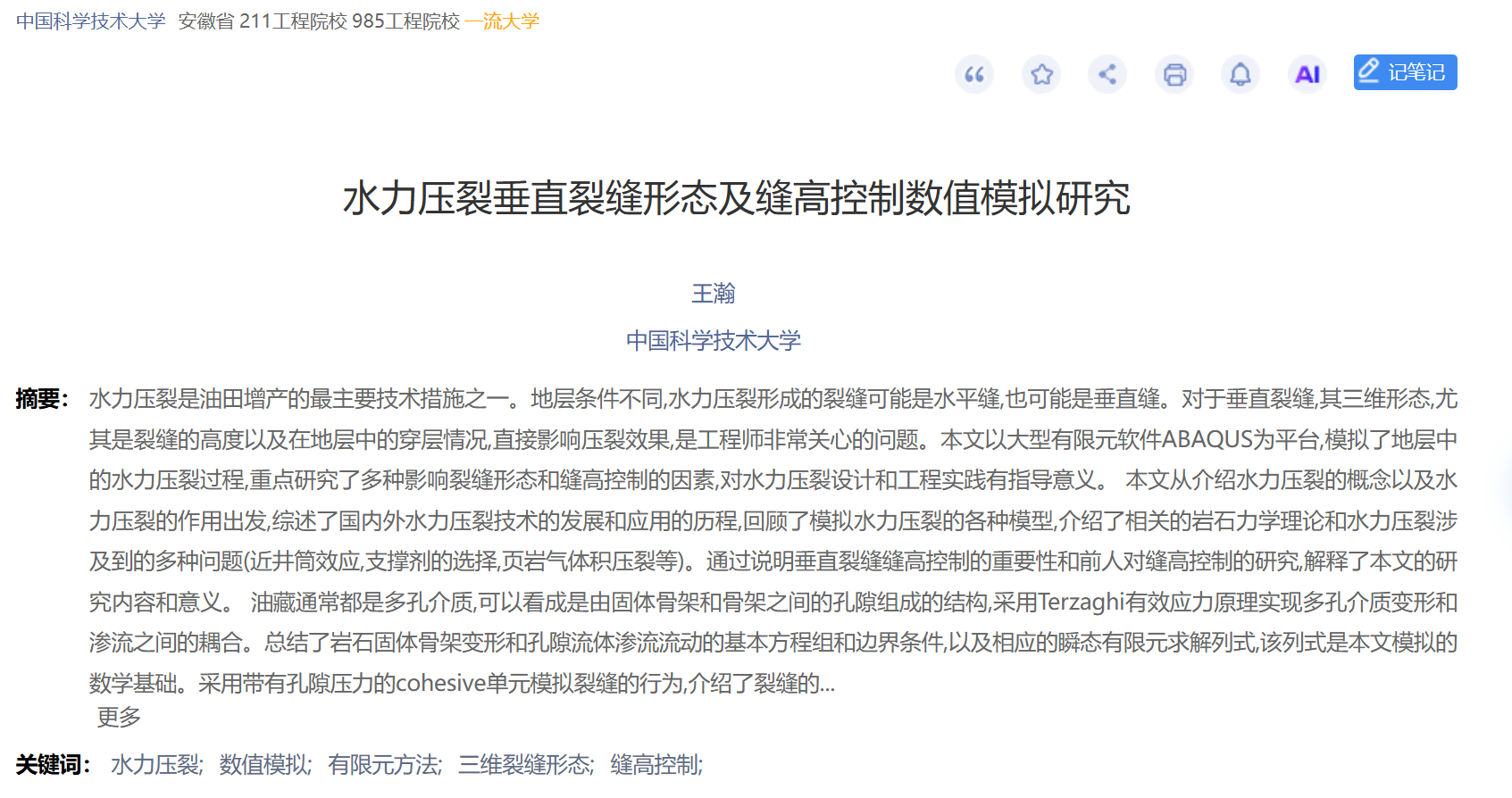
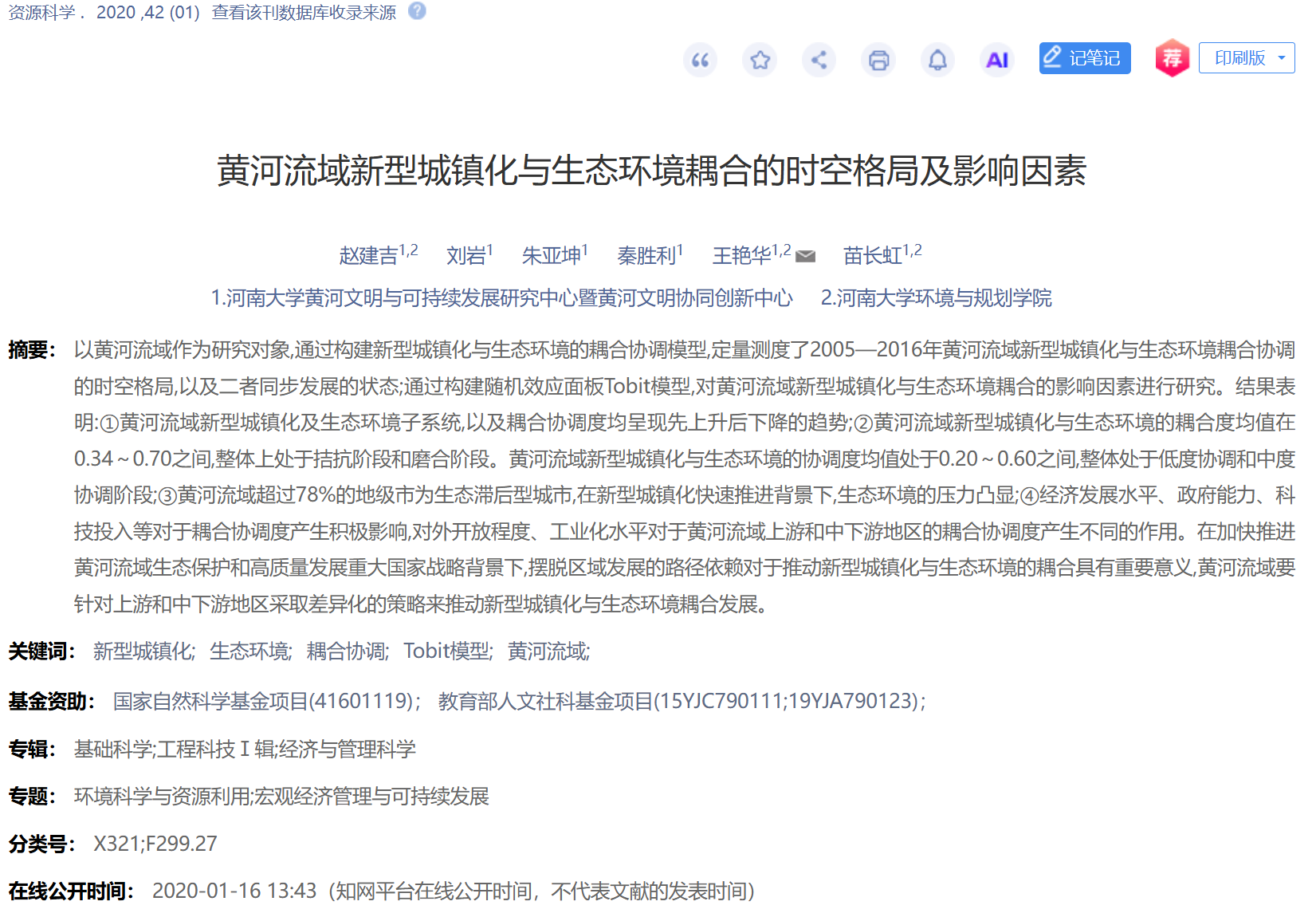
提炼一下主旨内容:在XX大背景下,提出XX模型或方法(或者创新性的把XX模型用到该领域,再或者把A模型和B模型有机结合起来得到A+B模型),实验表明,在试验数据集/试验对象上,取得了XXX的成果
在很多情况下,你能提出新思想最好,提不出来就把别人的方法糅合一下,再不就创新性的把研究上某高效方法用到某冷门领域
理解了之后我们来读一篇英文摘要试试:《Attention Is All You Need》这篇提出transformer的论文非常出名——尽管有人称该文的写作水平无法匹配不其方法在深度学习领域的建树
https://arxiv.org/pdf/1706.03762
abstract
The dominant sequence transduction models are based on complex recurrent or convolutional neural networks that include an encoder and a decoder. The best performing models also connect the encoder and decoder through an attention mechanism. We propose a new simple network architecture, the Transformer, based solely on attention mechanisms, dispensing with recurrence and convolutions entirely. Experiments on two machine translation tasks show these models to be superior in quality while being more parallelizable and requiring significantly less time to train. Our model achieves 28.4 BLEU on the WMT 2014 Englishto-German translation task, improving over the existing best results, including ensembles, by over 2 BLEU. On the WMT 2014 English-to-French translation task, our model establishes a new single-model state-of-the-art BLEU score of 41.8 after training for 3.5 days on eight GPUs, a small fraction of the training costs of the best models from the literature. We show that the Transformer generalizes well to other tasks by applying it successfully to English constituency parsing both with large and limited training data.
摘要翻译:
当前主流的序列 transduction(序列转换)模型均基于包含编码器(encoder)和解码器(decoder)的复杂循环神经网络(recurrent neural networks, RNNs)或卷积神经网络(convolutional neural networks, CNNs)。性能最佳的模型还会通过注意力机制(attention mechanism)将编码器与解码器连接起来。
本文提出一种全新的简单网络架构 ——Transformer,该架构完全基于注意力机制构建,彻底摒弃了循环结构与卷积操作。
在两项机器翻译任务上的实验表明,Transformer 模型不仅翻译质量更优,还具备更强的并行性,且训练所需时间显著缩短。在 WMT 2014 英德翻译任务中,该模型取得了 28.4 的 BLEU 值(机器翻译常用评价指标),相较于包括集成模型(ensembles)在内的现有最佳结果,BLEU 值提升超过 2。在 WMT 2014 英法翻译任务中,使用 8 块 GPU 训练 3.5 天后,该模型创下了单模型 BLEU 值 41.8 的最新最优(state-of-the-art)记录,而这一训练成本仅为文献中最佳模型训练成本的一小部分。
此外,通过将 Transformer 成功应用于训练数据量充足和有限两种场景下的英语组块分析(English constituency parsing)任务,我们证明该模型在其他任务上也具有良好的泛化能力。
我们不需要那么精通所有内容,但是中文看得出基本大差不差
而综述与前面相比略有不同,他针对的是XX领域目前各个已有的方法的优缺点和各自不足之处,以及下一步工作可能的发展方向等。与上述相比少了提出自己方法的环节(所以对于要求做出一定成果的硕博论文通常不建议写综述),但是对目前已有研究的分析需要比较深入
关于文献如何阅读,我并非高手,可以学一学这些
【摘要三要素:研究内容,研究方法,研究结果|英文摘要写作方法|英文摘要结构套用】 https://www.bilibili.com/video/BV1WD4y1a7aX/?share_source=copy_web&vd_source=11adc167bc48b56eb345626fd0a40a93
【5分钟讲解如何看文章摘要】 https://www.bilibili.com/video/BV1uKNJeuETS/?share_source=copy_web&vd_source=11adc167bc48b56eb345626fd0a40a93
如果你考上了,那么你读论文的姿态略有不同:
【如何去读一篇论文?实操讲解!】 https://www.bilibili.com/video/BV1sksoz7ENW/?share_source=copy_web&vd_source=11adc167bc48b56eb345626fd0a40a93
记住这个阶段了,读论文不是目的,读完能弄出点东西最重要——略读后最起码知道本论文值不值得自己读,精读后最起码要能流畅将给别人听。关于该部分就不深究了
总之,文献摘要翻译部分不足以难倒各位,下面会给出几篇论文摘要作为例子,各位可以试着先读。可以先用翻译软件看,看完关键单词最好记住英文,后面看关键词基本就知道在干什么了。在练习阶段可以找中文文献的英文摘要,无论是知网或是其他什么网站都有各种文献摘要让你读,基本足够你练习了
当然还有最最最简单的办法——让ai现场给你找,他找一篇你做一篇,前期可以眼高手低一点,大概看得懂就跳过,快考试了应付一下自己手搓一两篇,想挑战一下自己可以试试雅思的阅读——某位大佬学姐建议的
练习
接下来给几篇例子,相关单词不会那么难,看读者自己能否读明白。不过你不一定需要看完,我这些只是例子,你可以自己去找别的材料
Security and Privacy Risks in Artificial Intelligence Systems
Abstract: Human society is witnessing a wave of artificial intelligence (AI) driven by deep learning techniques, bringing a technological revolution for human production and life. In some specific fields, AI has achieved or even surpassed human-level performance. However, most previous machine learning theories have not considered the open and even adversarial environments, and the security and privacy issues are gradually rising. Besides of insecure code implementations, biased models, adversarial examples, sensor spoofing can also lead to security risks which are hard to be discovered by traditional security analysis tools. This paper reviews previous works on AI system security and privacy, revealing potential security and privacy risks. Firstly, we introduce a threat model of AI systems, including attack surfaces, attack capabilities and attack goals. Secondly, we analyze security risks and counter measures in terms of four critical components in AI systems: data input (sensor), data preprocessing, machine learning model and output. Finally, we discuss future research trends on the security of AI systems. The aim of this paper is to arise the attention of the computer security society and the AI society on security and privacy of AI systems, and so that they can work together to unlock AI’s potential to build a bright future.
Key words: intelligent system security, system security, data processing, artificial intelligence (AI), deep learning
The State of the Art and Future Tendency of Smart Education
Abstract: At present the smart education pattern supported by information technology such as big data analytics and artificial intelligence has become the trend of the development of education informatization, and also has become a popular research direction in academic hotspots. Firstly, we investigate and analyze the data mining technologies of two kinds of educational big data including teaching behavior and massive knowledge resources. Secondly, we focus on four vital technologies in teaching process such as learning guidance, recommendation, Q&A and evaluation, including learning path generation and navigation, learner profiling and personalized recommendations, online smart Q&A and precise evaluation. Then we compare and analyze the mainstream smart education platforms at home and abroad. Finally, we discuss the limitations of current smart education research and summarize the research and development directions of online smart learning assistants, learner smart assessment, networked group cognition, causality discovery and other smart education aspects.
Key words: smart education, educational big data, big data analytics, artificial intelligence, knowledge graph
A Survey of Artificial Intelligence Chip
Abstract: In recent years, artificial intelligence (AI)technologies have been widely used in many commercial fields. With the attention and investment of scientific researchers and research companies around the world, AI technologies have been proved their irreplaceable value in traditional speech recognition, image recognition, search/recommendation engine and other fields. However, at the same time, the amount of computation of AI technologies increases dramatically, which poses a huge challenge to the computing power of hardware equipments. At first, we describe the basic algorithms of AI technologies and their application algorithms in this paper, including their operation modes and operation characteristics. Then, we introduce the development directions of AI chips in recent years, and analyze the main architectures of AI chips. Furthermore, we emphatically introduce the researches of DianNao series processors. This series of processors are the latest and most advanced researches in the field of AI chips. Their architectures and designs are proposed for different technical features, including deep learning algorithms, large-scale deep learning algorithms, machine learning algorithms, deep learning algorithms for processing two-dimensional images and sparse deep learning algorithms. In addition, a complete and efficient instruction architecture(ISA) for deep learning algorithms, Cambricon, is proposed. Finally, we analyze the development directions of artificial neural network technologies from various angles, including network structures, operation characteristics and hardware devices. Based on the above, we predict and prospect the possible development directions of future work.
Key words: artificial intelligence, accelerators, FPGA, ASIC, weight quantization, sparse pruning
A Survey on Machine Learning Based Routing Algorithms
Abstract: The rapid development of the Internet accesses many new applications including real time multi-media service, remote cloud service, etc. These applications require various types of service quality, which is a significant challenge towards current best effort routing algorithms. Since the recent huge success in applying machine learning in game, computer vision and natural language processing, many people tries to design “smart” routing algorithms based on machine learning methods. In contrary with traditional model-based, decentralized routing algorithms (e.g.OSPF), machine learning based routing algorithms are usually data-driven, which can adapt to dynamically changing network environments and accommodate different service quality requirements. Data-driven routing algorithms based on machine learning approach have shown great potential in becoming an important part of the next generation network. However, researches on artificial intelligent routing are still on a very beginning stage. In this paper we firstly introduce current researches on data-driven routing algorithms based on machine learning approach, showing the main ideas, application scenarios and pros and cons of these different works. Our analysis shows that current researches are mainly for the principle of machine learning based routing algorithms but still far from deployment in real scenarios. So we then analyze different training and deploying methods for machine learning based routing algorithms in real scenarios and propose two reasonable approaches to train and deploy such routing algorithms with low overhead and high reliability. Finally, we discuss the opportunities and challenges and show several potential research directions for machine learning based routing algorithms in the future.
Key words: machine learning, data driven routing algorithm, deep learning, reinforcement learning, quality of service (QoS)
Coding-Based Performance Improvement of Distributed Machine Learning in Large-Scale Clusters
Abstract: With the growth of models and data sets, running large-scale machine learning algorithms in distributed clusters has become a common method. This method divides the whole machine learning algorithm and training data into several tasks and each task runs on different worker nodes. Then, the results of all tasks are combined by master node to get the results of the whole algorithm. When there are a large number of nodes in distributed cluster, some worker nodes, called straggler, will inevitably slow down than other nodes due to resource competition and other reasons, which makes the task time of running on this node significantly higher than that of other nodes. Compared with running replica task on multiple nodes, coded computing shows an impact of efficient utilization of computation and storage redundancy to alleviate the effect of stragglers and communication bottlenecks in large-scale machine learning cluster.This paper introduces the research progress of solving the straggler issues and improving the performance of large-scale machine learning cluster based on coding technology. Firstly, we introduce the background of coding technology and large-scale machine learning cluster. Secondly, we divide the related research into several categories according to application scenarios: matrix multiplication, gradient computing, data shuffling and some other applications. Finally, we summarize the difficulties of applying coding technology in large-scale machine learning cluster and discuss the future research trends about it.
Key words:Coded Computing; Distributed Machine Learning; Straggler Node; Performance Optimization; Computation and Storage Redundancy
A Big Data Security Scheme Based on High-Performance Cryptography Implementation
Abstract: At present, the trend of information technology development is the artificial intelligence technology based on big data computing. Although it has made enormous contribution in the economic development, big data processing technology which includes cloud computing, fog computing, edge computing and other computing modes also brings a great risk of data security. Cryptographic technology is the kernel of the big data security. Confidentiality, authentication and privacy protection of big data need to solve the following three security problems: firstly, high-speed encryption and decryption of massive data; secondly, the authentication problem of high concurrency and large scale user; thirdly, privacy protection in data mining. The solution of these problems requires the fast implementation of the underlying cryptographic algorithm. Aiming at the logic architecture of big data security application, this paper gives a fast calculation algorithm for the cryptographic standard algorithm SM4-XTS, SM2 and modular exponentiation of large integers. It is verified on the KC705 development board based on Xilinx company, the results of experiment show that our work has certain advancement: 1) The implementation of SM4-XTS fills the blank of this direction in China. 2) SM2 signature has high performance, leading domestic similar products. 3) Modular exponentiation is applied to the productization of homomorphism cryptography, and its performance is ahead of other similar products.
Key words: SM4-XTS, SM2, modular exponentiation, high-speed implementation of cryptographic algorithm, big data
Research Review of Knowledge Graph and Its Application in Medical Domain
Abstract: With the advent of the medical big data era, knowledge interconnection has received extensive attention. How to extract useful medical knowledge from massive data is the key for medical big data analysis. Knowledge graph technology provides a means to extract structured knowledge from massive texts and images.The combination of knowledge graph, big data technology and deep learning technology is becoming the core driving force for the development of artificial intelligence. The knowledge graph technology has a broad application prospect in the medical domain. The application of knowledge graph technology in the medical domain will play an important role in solving the contradiction between the supply of high-quality medical resources and the continuous increase of demand for medical services.At present, the research on medical knowledge graph is still in the exploratory stage. The existing knowledge graph technology generally has several problems such as low efficiency, multiple restrictions and poor expansion in the medical domain. This paper firstly analyzes the medical knowledge graph architecture and construction technology for the strong professionalism and complex structure of big data in the medical domain. Secondly, the key technologies and research progress of the three modules of knowledge extraction, knowledge expression, knowledge fusion and knowledge reasoning in medical knowledge map are summarized. In addition, the application status of medical knowledge maps in clinical decision support, medical intelligence semantic retrieval, medical question answering system and other medical services are introduced. Finally, the existing problems and challenges of current research are discussed and analyzed, and its development is prospected.
Key words: knowledge graph, medical wisdom, big data, knowledge fusion, natural language processing
Learning Behavior Analysis and Prediction Based on MOOC Data
Abstract: With the booming of MOOC (massive open online course) in the past two years, educational data analysis has become a promising research field where the quality of teaching and learning can be and is being quantified to improve the educational effectiveness and even to promote the modern higher education. In the autumn of 2013, Peking University released its first six courses on the Coursera platform. Through mining and analyzing the massive data of learning behavior of over 80000 participants from the courses, this paper endeavors to manifest more than one side of learning activity in MOOC. Meanwhile, according to the characteristic of learning behavior in Chinese MOOC, learners are classified into several groups and then the relationship between their learning behavior and performance is thoroughly studied. Based on the above work, we find out that learners performance, regarding whether heshe could get certificated eventually, can be predicted by looking into several features of their learning behavior. Experiment results indicate that these features can be trained to effectively estimate whether a learner is probably to complete the course successfully. Besides, this method has the potential to partially evaluate the quality of both teaching and learning in practice.
Key words: massive open online course (MOOC), engagement style, learning behavior, data analysis, performance prediction
Knowledge Graph Construction Techniques
Abstract: Google’s knowledge graph technology has drawn a lot of research attentions in recent years. However, due to the limited public disclosure of technical details, people find it difficult to understand the connotation and value of this technology. In this paper, we introduce the key techniques involved in the construction of knowledge graph in a bottom-up way, starting from a clearly defined concept and a technical architecture of the knowledge graph. Firstly, we describe in detail the definition and connotation of the knowledge graph, and then we propose the technical framework for knowledge graph construction, in which the construction process is divided into three levels according to the abstract level of the input knowledge materials, including the information extraction layer, the knowledge integration layer, and the knowledge processing layer, respectively. Secondly, the research status of the key technologies for each level are surveyed comprehensively and also investigated critically for the purposes of gradually revealing the mysteries of the knowledge graph technology, the state-of-the-art progress, and its relationship with related disciplines. Finally, five major research challenges in this area are summarized, and the corresponding key research issues are highlighted.
Key words: knowledge graph, semantic Web, information retrieval, semantic search engine, natural language processing
A Survey on Algorithm Research of Scene Parsing Based on Deep Learning
Abstract: Scene parsing aims to predict the category of each pixel in a scene image. Scene parsing is a fundamental and important task in computer vision. It has great significance of analyzing and understanding scene images, and has a wide range of applications in many fields such as automatic driving, video surveillance, and augmented reality. Recently, scene parsing algorithm based on deep learning has a breakthrough, and achieves great improvement compared with the traditional scene parsing algorithms. In this survey, we firstly analyze and describe the three difficulties in scene parsing, including fine-grained parsing results, multiple scale deformations, and strong spatial relationships. Then we focus on the “convolutionaldeconvolutional” framework which is widely used in most of the deep learning based scene parsing algorithms. Furthermore, we introduce the newly proposed scene parsing algorithm based on deep learning in recent years. To tackle the three difficulties in scene parsing, the recent deep learning based algorithms employ high-resolution feature maps, multi-scale information and contextual information to further improve the performance of scene parsing. After that, we briefly introduce the common public scene parsing datasets. Finally, we make the conclusion for scene parsing algorithm based on deep learning and point out some potential opportunities.
Key words: scene parsing, image segmentation, deep learning, neural network, fully convolutional network
The Optimization Method of Wireless Network Attacks Detection Based on SemiSupervised Learning
Abstract: Aiming to optimize the attacks detection in high-dimensional and complex wireless network traffic data with deep learning technology, this paper proposed a WiFi-ADOM (WiFi network attacks detection optimization method) based on semi-supervised learning. Firstly, based on stacked sparse auto-encoder (SSAE), which is an unsupervised learning model, two types of network traffic feature representation vectors are proposed: new feature value vector and original feature weight value vector. Then, the original feature weight value vector is used to initialize the weight value of the supervised learning model deep neural network to obtain the preliminary result of the attack type, and the unsupervised learning clustering method Bi-kmeans is used to produce the corrective term for unknown attacks discrimination with the new feature value vectors. Finally, the preliminary result of the attack type and the corrective term of the unknown attacks discrimination are combined to obtain the final result of the attack type. Compared with the existing attacks detection methods with the public wireless network traffic data set AWID, the optimal performance of the method of WiFi-ADOM for network attacks detection is verified. At the same time, the importance of features in network attacks detection is explored. The results show that the method of WiFi-ADOM can effectively detect unknown attacks while ensuring detection performance.
Key words: network attacks detection, network intrusion detection, semi-supervised learning, deep learning, Bi-kmeans clustering
Question Answering Algorithm on Image Fragmentation Information Based on Deep Neural Network
Abstract: Many fragmentation information is highly dispersed in different data sources, such as text, image, video and Web. They are characterized by structural disorder and content one-sided. Current researches implement the extraction, expression and understanding of multi-modal fragmentation information by constructing visual question answering (VQA) system. The VQA task is required to provide the correct answer to a given problem with a corresponding image. The aim of this paper is to design a complete framework and algorithm for image fragmentation information question answering under the basic background of visual question answering task. The main research includes image feature extraction, question text feature extraction, multimodal feature fusion and answer reasoning. Deep neural network is constructed to extract features for representing images and problem information. Attention mechanism and variational inference method are combined to fusion two modal features of image and problem and reason answers. Experiment results show that the model can effectively extract and understand multimodal fragmentation information, and improve the accuracy of VQA.
Key words: artificial intelligence, fragmented information, neural network, deep learning, visual question answering (VQA)
Cyber Security Threat Intelligence Sharing Model Based on Blockchain
Abstract: In the process of increasing cyber security attack and defense confrontation, there is a natural asymmetry between the offensive and defensive sides. The CTI (cyber security threat intelligence) sharing is an effective method to improve the responsiveness and effectiveness of the protection party. However, there is a contradiction between the privacy protection requirements of CTI sharing and the need to build a complete attack chain. Aiming at the above contradiction, this paper proposes a blockchain-based CTI sharing model, which uses the account anonymity of the blockchain technology to protect the privacy of CTI sharing party, and at the same time utilizes the tamper-free and accounting of the blockchain technology to prevent the “free-riding” behavior in CTI sharing and guarantee the benefit of CTI sharing party. The one-way encryption function is used to protect the private information in CTI, then the model uses the encrypted CTI to build a complete attack chain, and uses the traceability of the blockchain technology to complete the decryption of the attack source in the attack chain. The smart contract mechanism of the blockchain technology is used to implement an automated early warning and response against cyber security threats. Finally, the feasibility and effectiveness of the proposed model are verified by simulation experiments.
Key words: cyber security, cyber security threat intelligence, attack chain, privacy protection, blockchain
A Low-Coupling Method in Sensor-Cloud Systems Based on Edge Computing
Abstract: The rapid development of the IoT and cloud computing has spawned a new network structure-sensor cloud. Sensor cloud is the combination of IoT and cloud computing. Physical sensor nodes in the IoT can be virtualized into multiple nodes through the sensor cloud platform to provide services to users. However, when one sensor node receives multiple service commands at the same time, some service conflicts occur, which named coupling problems. This coupling problem can lead to the failure of services and compromise system security. In order to solve this problem, this paper proposes an extended KM (Kuhn-Munkres) algorithm based on edge computing. Edge computing is an emerging computational paradigm, increasingly utilized in IoT applications, particularly those that cannot be served efficiently using cloud computing due to limitations such as latency. The edge computing platform acts as a middleware platform and provides the scheduling method. Firstly, the edge computing layer merges the similar commands to reduce the downward transmission commands. Secondly, the buffered data in the edge computing layer is scheduled. Finally, the extended KM algorithm is used to achieve the maximum matching of each round. The theoretical analysis and experimental results show that the proposed method can improve the utilization of resources, reduce the calculation cost, and solve the coupling problem in a minimum time.
Key words: sensor-cloud, Internet of things, edge computing, low-coupling, Kuhn-Munkres algorithm
Reliability in Cloud Computing System: A Review
Abstract: As a new computing paradigm, cloud computing has attracts extensive concerns from both academic and industrial fields. Based on resource virtualization technology, cloud computing provides users with services in the forms of infrastructure, platform and software in a “pay-as-you-go” manner. In the meanwhile, since cloud computing provides highly scalable computing resources, more and more enterprises and organizations choose cloud computing platforms to deploy their scientific or commercial applications. However, with the increasing number of cloud users, cloud data centers continuously expand and the architecture becomes increasingly complex, leading to growing runtime failures in cloud computing systems. Therefore, how to ensure the system reliability in cloud computing systems with large scale and complex architecture has become a huge challenge. This paper first summarizes various failures in cloud systems, introduces several methods to evaluate the reliability of cloud computing, and describes some key fault management mechanisms. Since fault management techniques inevitably increase energy consumption of cloud systems, this paper reviews current researches on the trade-off between reliability and energy efficiency in cloud computing. In the end, we propose some major challenges in current research of cloud computing reliability and concludes our paper.
Key words: cloud computing, virtualization, reliability, fault management, energy consumption
A Survey of Smart Health: System Design from the Cloud to the Edge
Abstract: Smart health is a real-time, intelligent, ubiquitous healthcare service based on the IoT aware network and sensing infrastructure. Thanks to the rapid development of related technologies such as cloud computing, fog computing and IoT, research on smart health is gradually on the right track. This paper analyzes research on smart health in recent years and then discusses the development of smart health from both cloud and edge, including cloud computing, fog computing, IoT sensors, blockchain, and privacy and security. At present, in the research of cloud and smart health, the focus is on how to use the cloud to complete the challenges of massive health data and improve service performance, including related issues such as storage, retrieval and calculation of health big data in the cloud. At the edge, research focuses on the collection, transmission, and computation of health data, including sensors and wearable devices for collecting health data, various sensor networks, and how to process health data and improve service performance at the edge. As an emerging technology, blockchain has a wide range of applications in smart health. We discuss typical smart health application, blockchain in smart health and privacy and security issues related to smart health. Finally, we present challenges and opportunities for smart health in the edge computing era.
Key words: smart health, cloud computing, fog computing, sensor, blockchain, privacy and security, survey
Survey on Sensor Network Research
Abstract: Recent advances in sensing techniques, embedded computing techniques, distributed information processing techniques and communication techniques have enabled the development of wireless sensor networks. As there is a bright future in their application, wireless sensor networks have become a new research area in the 21 century. There are large numbers of challenge problems in science and engineering in the wireless sensor network area. Since 2000, more and more researchers have been engaged in the research work on wireless sensor networks and a lot of research results have already been obtained. Suiveyed in this paper is the research work on wireless sensor networks, including the wireless sensor network communication techniques, infrastructure techniques, middleware techniques, data management techniques, sensor node and embedded software techniques. The existing problems in the current research work and the new research issues are also discussed. At the end of the paper, many significant references are listed for the researchers.
Key words: sensor node, sensor network, communication protocol, infrastructure, middleware, data management
Node Location Verification Framework for WSN
Abstract: Localization is one of the pivot technologies in wireless sensor networks. The traditional node localization schemes consider that the locations of anchors are reliable, which makes these schemes are invalid in some scenarios with unreliable anchors such as drifted anchors, fake anchors and malicious anchors. Aiming at solving this problem mentioned above, a distributed and lightweight node location verification framework (NLVF) is proposed. NLVF offers location verification service as an underlying technic for the traditional localization algorithms, including range-based localization algorithm and the range-free localization algorithm. NLVF can filter out these unreliable anchors by which the application area of traditional localization algorithms is enlarged. UNDA (unreliable node detection algorithm) is the key algorithm of NLVF. It constructs location reputation model based on mutual distance observation between neighbors in WSN. UNDA algorithm improves the localization reliability by filtering out these anchors with inferior location reputations. Extensive experiments are conducted to evaluate the performance of UNDA. Results show that NLVF is adapted to both of range-based and range-free localization schemes. It works better in the presence of three kinds of unreliable anchors. So, it yields general applicability. In addition, UNDA relatively has high accuracy, and the average success rate of detection is more than 95%, so NLVF yields significant practicability.
Key words: wireless sensor network (WSN), node localization, reliable localization, node location verification, distributed reputation model
更多推荐
 22
22 0
0- 0


 已为社区贡献4条内容

所有评论(0)