
单体转微服务:正确的拆分思路与实战原则(中)
·
一.利用OpenFeign优化restTemplate
<1>引入依赖
  <!--openFeign-->
  <dependency>
      <groupId>org.springframework.cloud</groupId>
      <artifactId>spring-cloud-starter-openfeign</artifactId>
  </dependency>
  <!--负载均衡器-->
  <dependency>
      <groupId>org.springframework.cloud</groupId>
      <artifactId>spring-cloud-starter-loadbalancer</artifactId>
  </dependency>
<2>添加启动注解
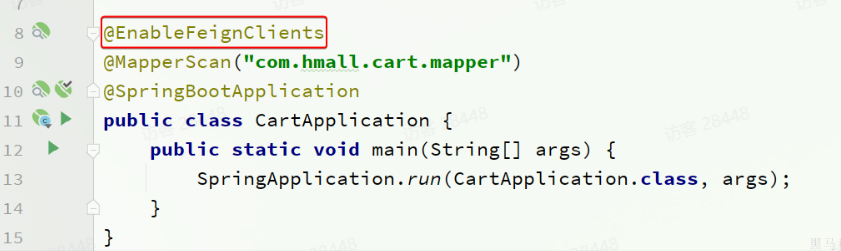
<3>配置openfeignClient接口
@FeignClient("item-service")
public interface ItemClient {
    @GetMapping("/items")
    Set<ItemDTO> queryItemByIds(Set<Long> ids);
}
<4>实现远程调用
Set<ItemDTO> items = itemClient.queryItemByIds(itemIds);
二.启用连接池优化OpenFeign
Feign底层发起http请求,依赖于其它的框架。其底层支持的http客户端实现包括:
-
HttpURLConnection:默认实现,不支持连接池
-
Apache HttpClient :支持连接池
-
OKHttp:支持连接池
因此我们通常会使用带有连接池的客户端来代替默认的HttpURLConnection。比如,我们使用OK Http.
1.引入依赖
<!--OK http 的依赖 -->
<dependency>
  <groupId>io.github.openfeign</groupId>
  <artifactId>feign-okhttp</artifactId>
</dependency>
2.配置连接池
feign:
  okhttp:
    enabled: true # 开启OKHttp功能
三.微服务架构的最佳实践------避免重复编码
-
思路1:抽取到微服务之外的公共module
-
思路2:每个微服务自己抽取一个module
思路1抽取更加简单,工程结构也比较清晰,但缺点是整个项目耦合度偏高。
思路2抽取相对麻烦,工程结构相对更复杂,但服务之间耦合度降低。
由于item-service已经创建好,无法继续拆分,因此这里我们采用方案1.
大型项目往往采用思路2,因为其耦合度更低
四.OpenFeign进一步优化----开启日志配置
OpenFeign只会在FeignClient所在包的日志级别为DEBUG时,才会输出日志。而且其日志级别有4级:
-
NONE:不记录任何日志信息,这是默认值。
-
BASIC:仅记录请求的方法,URL以及响应状态码和执行时间
-
HEADERS:在BASIC的基础上,额外记录了请求和响应的头信息
-
FULL:记录所有请求和响应的明细,包括头信息、请求体、元数据。
Feign默认的日志级别就是NONE,所以默认我们看不到请求日志。
1.修改日志配置为debug
logging:
  level:
    com.hmall.api: debug
2.编写配置类
package com.hmall.api.config;

import feign.Logger;
import org.springframework.context.annotation.Bean;

public class DefaultFeignConfig {
    @Bean
    public Logger.Level feignLogLevel(){
        return Logger.Level.FULL;
    }
}
3.局部生效 or 全局生效
-
局部生效:在某个
FeignClient中配置,只对当前FeignClient生效
@FeignClient(value = "item-service", configuration = DefaultFeignConfig.class)
-
全局生效:在
@EnableFeignClients中配置,针对所有FeignClient生效。
@EnableFeignClients(defaultConfiguration = DefaultFeignConfig.class)
更多推荐
 3
3 0
0- 0


 已为社区贡献9条内容

所有评论(0)