
Java 7——异常处理
什么是异常?
异常(Exception)是程序在编译期或运行期发生的、干扰正常指令流的事件。Java 使用异常处理机制将异常信息封装为对象,并提供了捕获与处理的语法
异常就是错误对象
编译时异常
运行时异常
抛异常
捕获异常,默认是JVM来捕获异常,程序会中断
异常的分类
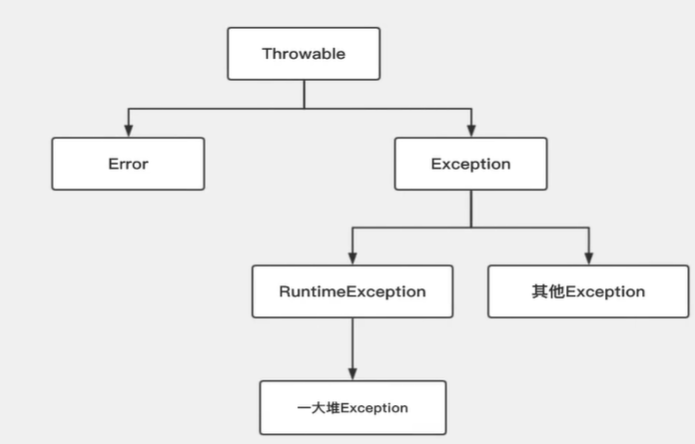
1.RuntimeException:运行时异常:一般不手动处理,出问题了再处理
2.其他Exception:必须要经过手动处理
2.Error:一般指的是系统级错误
异常体系结构
所有异常类都继承自 Throwable,其下分为两个主要分支:
Throwable
├── Error
│ └── 严重问题,如 OutOfMemoryError、StackOverflowError,程序无法处理
└── Exception
├── 受检异常(Checked Exception)
│ ├── IOException(IO异常)
│ ├── SQLException(数据库异常)
│ ├── ClassNotFoundException
│ └── 自定义异常(继承 Exception)
└── 非受检异常(Unchecked Exception / RuntimeException)
├── ArithmeticException(除以0)
├── NullPointerException(空指针)
├── ArrayIndexOutOfBoundsException(数组越界)
├── ClassCastException(类型转换异常)
├── IllegalArgumentException(非法参数)
└── 自定义运行时异常(继承 RuntimeException)
受检异常(Checked Exception)
编译器会检查此类异常,必须通过 throws 声明或 try-catch 处理
代表:IOException、SQLException、ClassNotFoundException
非受检异常(Unchecked Exception)
编译器不强制处理,通常由编程错误导致
代表:NullPointerException、ArithmeticException、ArrayIndexOutOfBoundsException
所有 RuntimeException 及其子类都是非受检异常
错误(Error)
由 JVM 抛出,程序无法处理(如内存溢出)
一般不捕获也不抛出。
异常处理关键字
| 关键字 | 作用 |
|---|---|
try | 包裹可能抛出异常的代码块 |
catch | 捕获并处理特定类型的异常 |
finally | 无论是否发生异常,都会执行的代码块(用于释放资源) |
throw | 手动抛出异常对象(方法体内) |
throws | 声明方法可能抛出的异常类型(方法签名后) |
异常的处理
try...catch
try{
尝试执行的代码
}catch(Exception e){
处理异常的代码
}finally{
最终的
}
try-catch
try {
    // 可能发生异常的代码
    int result = 10 / 0;
} catch (ArithmeticException e) {
    // 处理异常
    System.out.println("除数不能为0:" + e.getMessage());
}
多重 catch
try {
    int[] arr = new int[5];
    arr[10] = 100;
} catch (ArrayIndexOutOfBoundsException e) {
    System.out.println("数组越界");
} catch (Exception e) {
    System.out.println("其他异常");
}
try-catch-finally
FileInputStream fis = null;
try {
    fis = new FileInputStream("test.txt");
    // 读取文件
} catch (IOException e) {
    System.out.println("文件操作异常");
} finally {
    // 无论是否发生异常,都会执行
    if (fis != null) {
        try { fis.close(); } catch (IOException e) { }
    }
}
throws和throw
throws
表示方法准备要扔出来一个异常
产生的错误尽可能自己处理,少向外抛出异常
throw
表示向外抛出异常
throw 手动抛出异常
public void setAge(int age) {
    if (age < 0 || age > 150) {
        throw new IllegalArgumentException("年龄必须在0~150之间");
    }
    this.age = age;
}
throws 声明抛出异常
public void readFile(String path) throws IOException {
    FileInputStream fis = new FileInputStream(path);
    // ...
}
自定义异常
直接继承Exception或者RuntimeException来实现自定义异常
受检异常(继承 Exception)
class MyCheckedException extends Exception {
    public MyCheckedException(String message) {
        super(message);
    }
}
非受检异常(继承 RuntimeException)
class MyUncheckedException extends RuntimeException {
    public MyUncheckedException(String message) {
        super(message);
    }
}
更多推荐
 13
13 0
0- 0


 已为社区贡献7条内容

所有评论(0)